
This is not my list of the greatest horror movies though some of these films might appear on such a list. Rather, this is a list of horror films that I love/am fascinated by. I’ve tried to select films that are not usually mentioned on typical Halloween lists of scary movies. Some of these are great and others are surprisingly good. If you are a horror aficionado, don’t expect anything you haven’t seen or heard about. 31 films and 1 extra short — most are readily available and I’ve provided links. Enjoy…or don’t. I don’t care.
Scarecrows (1988)
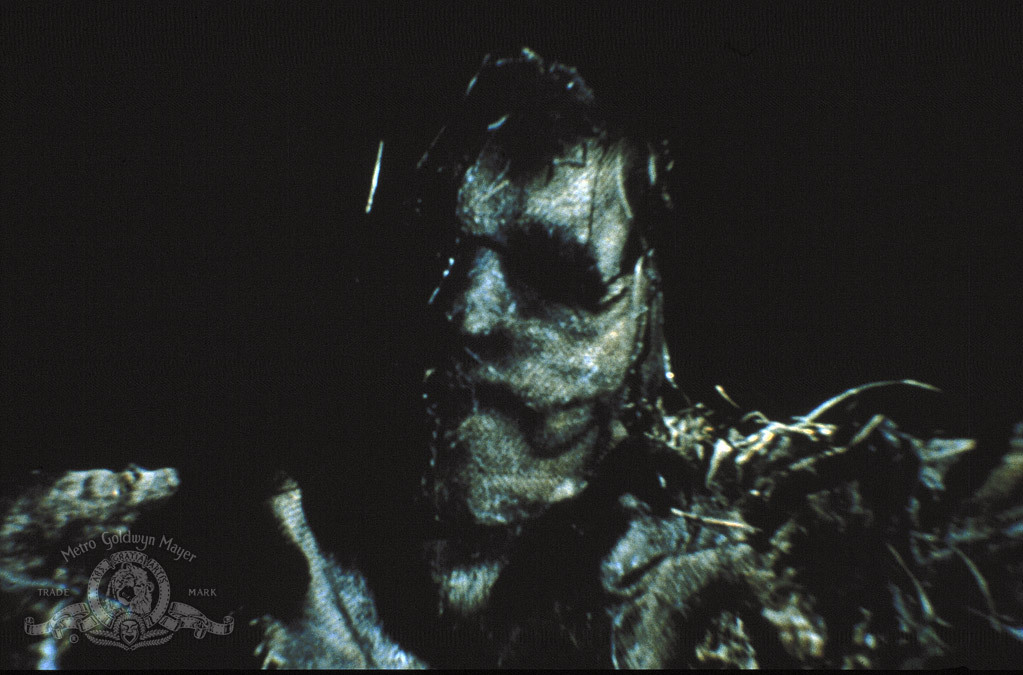
A chilling little low-budget gem that specializes in atmosphere because that’s all it can afford. After hijacking a plane, a group of mercenaries crash into the wrong cornfield. They don’t last very long. In true guerrilla-style filmmaking, Ted Vernon was cast because he provided $150,000 for the budget. Peter Deming of Evil Dead 2 fame photographed the shadow-lit special effects. You can watch Scarecrows here.
Death Line [AKA Raw Meat] (1972)
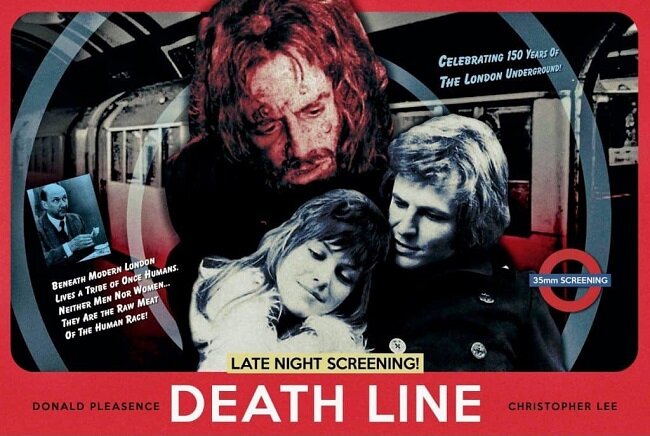
This British film is a bleak, harrowing tale of cannibals living under the Tube. A clear influence on Craven’s The People Under the Stairs, it somehow inspires sympathy for the cannibals without ever playing as allegory — a clear sign the film works. With a typically fantastic performance by Donald Pleasance, Raw Meat (the American title is so much better!) is a powerful horror movie. It’s free on YouTube.
The Body Snatcher (1945)
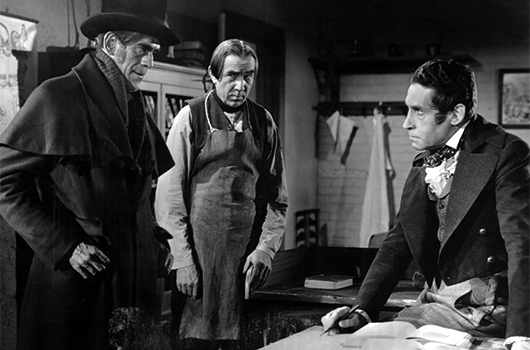
Producer Val Lewton’s 40s RKO horrors are justly celebrated as masterpieces of expressionism. The Body Snatcher firmly belongs in the group — look at the shadowy murder of the street singer– but it also has what I think is Boris Karloff’s finest work. Mr. Grey is as sinister a character as you’ll ever meet, slinking the corners of the frame while barely able to carry that colossal grudge motivating him. With just a little makeup and a whole lot of vindictiveness, he created an unforgettable portrait. It’s been years since I’ve seen the film, but I still remember the way he tilts his head. It’s free on YouTube.
The Addiction (1995)
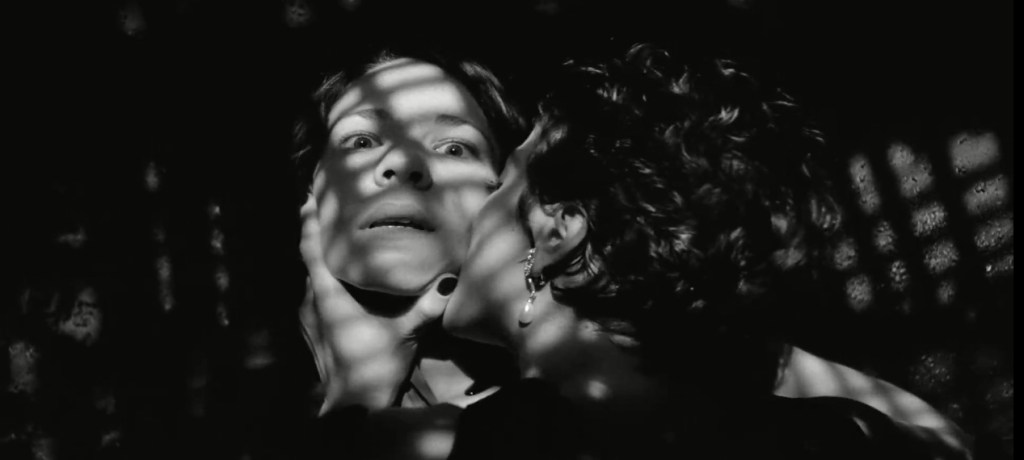
Cinematic metaphors tend to work better when they are subtler. Once the “code” has been cracked, films get boring quickly because the metaphor renders the action of the film almost moot. But not with horror films. Oddly enough, the bigger (and sloppier) the metaphor, the more powerful it seems to be and the more immediate it makes the action. George Romero and David Cronenberg are probably the best examples. One of my favorite examples of this is The Addiction which is so obviously about drug use that it can hardly be called a vampire film. But it is. In fact, it’s one of the few vampire films where the victims are completely complicit. They yearn for the illness much the same way a sick person yearns for dope. This masterpiece on a small scale slipped through the cracks like most of Ferrara’s films have. It’s a shame. This is good work with terrific performances all the way around, especially by Annabella Sciorra and Christopher Walken. It’s free on YouTube.
100 Bloody Acres (2012)
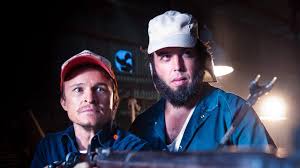
Horror-comedy is not my favorite genre splice. Typically these films leave me dissatisfied, wanting more laughs or more terror. It doesn’t mean there can’t be comedy in horror (Psycho and The Texas Chainsaw Massacre are very funny films if you look at them a certain way), but the purposeful marriage of the two genres tends to nullify the power horror films can have. I like some of them (Eating Raoul is charming, Shaun of the Dead is fun, and I think I’m one of 10 living people who like The Fearless Vampire Killers), but I’d say there’s only one horror/comedy masterpiece and that’s 100 Bloody Acres.
It’s an Australian film with a wild sense of humor and a firm grasp on the physical and existential threats of the outback. More than anything, it’s wonderful filmmaking (I don’t think the directors have made anything else!), somehow naturally fitting in some good-natured hopefulness within all the carnage. I think you’ll really enjoy it. Here’s the trailer.
Martin (1977)
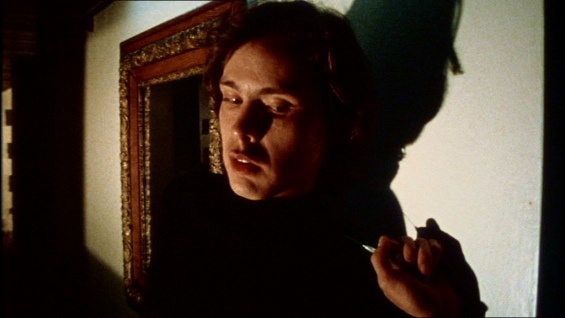
George Romero’s Martin (1977) [not to be confused with the television show Mar–tiiiiin (1992-1997)] is about a vampire…but not. You see, Martin identifies as a vampire. Even though he doesn’t have fangs, he does have a supply of razor blades and a need for blood.
Martin is a modern film about modern psychosis. It’s a prime example of Romero’s ability to edit small scenes on a large scale. If you’ve ever wondered why the remake of Dawn of the Dead (2004), with all its digital special effects, looks like a little video game screen whilst Romero’s version (1979), with Tom Savini practicals, looks like an enormous apocalypse, it’s because Romero knew how to edit the story to maximum effect. None of the locations for Martin are beyond the grasp of the average college film student, but they create a desolate vision of Pittsburgh in much the same way Godard made Paris futuristic in Alphaville.
Sure, not all the acting is top-notch — some of you may be especially bothered by the cousin– but so much of this is dazzling. The opening sequence on a train (not for the squeamish), the chase through the house (absolutely stunning, one of my favorite chase sequences), and the lonely walks through the empty streets (so evocative of Nosferatu) — Martin is a flat-out masterpiece. I cannot recommend it highly enough. Oh yeah, it’s free on YouTube.
Inside (2007)
At the turn of the century, an informal movement began in French cinema. Eventually dubbed “New Extremity”, these were graphic horrors that cared little about their audience’s sensibilities. While I admired some of these films, most left me unimpressed. The most famous was probably Martyrs (2008), a bold, intriguing, but ultimately unaffecting film with a grand concept and a stagnant execution.
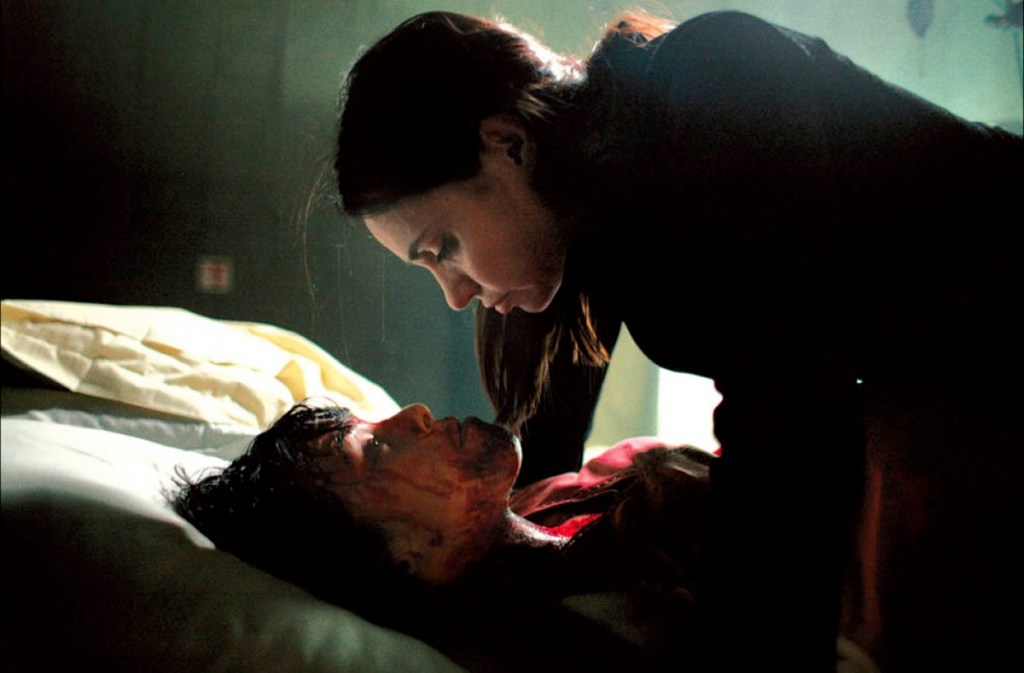
There is, however, one film from the movement that I consider brilliant. It’s just as gory and troubling as its siblings but surpasses them in atmosphere, suspense, and subtextual power. Inside.
Sarah is not having a good pregnancy. After a car crash kills her husband, she’s home alone waiting for her water to break. There’s a knock on the door. It’s a woman (we never learn her name). She doesn’t say much, but she wants something from Sarah and she’ll do anything to get it.
Cesarean abduction is one of those unspeakable, irrational fears. Fans of true crime know that it does happen. And what a devastating betrayal of humanity it is. Inside is admittedly too intense for some viewers, but if you like visceral horror, you’re not going to see anything much better. I was blown away by it. Of course, all films have flaws. Inside has two inexplicable shots from inside the womb. They look terrible and they add nothing to the story. A minor quibble. You can watch it here.
The Company of Wolves (1984)
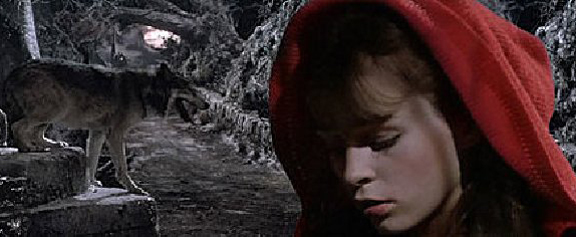
Film number 8 for my Halloween recommendations is Neil Jordan and Angela Carter’s subversive version of Little Red Riding Hood, The Company of Wolves. As you can tell by the title, the focus has been shifted.
This is one example (from many) of precursors to the Twlightish idea of making the monsters appealing, but…you know…not fucking stupid. Jordan’s film is high style, giving us a true fairy tale experience and bathing the whole thing in blood. It’s not a film of tremendous special effects (the transformation scenes are not up to the Hollywood magic of An American Werewolf in London or The Howling), but it’s a triumph of imagination. Easily my favorite werewolf movie. Certainly better than the shitty The Wolf Man (1941). You can watch the trailer here.
Short Night of Glass Dolls (1971)
This is a bit of an oddball. Far from my favorite Giallo (that honor goes to The Black Belly of the Tarantula [1971]), Short Night of Glass Dolls (1971) still holds a special place in my heart. It’s essentially a mystery whose solution is one of the most horrifying nightmares a human can experience. I love the film for several reasons, but one of the biggest is the images of Prague from the early seventies. It looks a lot like the city did when I moved there in 2006 — same trams, same architecture, and somehow the same faces and clothing. It’s a little slower in rolling out the plot than you might like, but it’s well worth it for the squirm-inducing ending. It’s also free on YouTube, so stop your bitching.
Sisters (1973)
Film 10 on my list of horror movie recommendations is Brian DePalma’s glorious shocker, Sisters (1973). Combining DePalma’s wicked sense of humor with his rigorous devotion to montage and mise en scene, this is the timeless tale of Siamese twins with opposite personalities. One of them is okay, the other murderous. It begins like an outtake from Greetings (1968) with our characters on a game show, but we soon find ourselves in Hitchcock territory with a split-screen investigation/clean-up of a murder (stunning!) and a twisted journey into the mind of a psychotic.
It’s difficult to explain to today’s filmgoers exactly how despised Brian DePalma was (and still is by geriatric creeps). Accusations of bad taste, misogyny, incompetence…it’s stunning to think about now. I remember two friends at school laughing at me because I thought Carlito’s Way was a good film. They performed a derisive theme song for the film that they had invented for the credits. Later, Cahiers du Cinema called it the best film of the nineties. I wasn’t friends with those two when that happened. I wish I had still known them. Another time, I recall a teacher mocking me because I liked DePalma. Imagine that — liking a director who actually uses the camera to tell a story. Nowadays, if someone tells me they don’t like DePalma, I stop listening to anything else they have to say. There’s little chance anything intelligent is forthcoming from their mouths.
Anyway, if you haven’t seen it, watch Sisters this Halloween. It’s fun, inventive, and genuinely scary. Oh, and it’s got three great performances, Charles Durning as a dogged PI, Jennifer Salt as the curious reporter, and Margot Kidder as the titular sisters. Here’s the trailer.
The Tenant (1976)
I’ve struggled with this film over the years. My opinion has wavered from god-awful to brilliant. I recently read the novel by Roland Topor, and I’ve finally decided. This is a great film. Yes, some of the alienating effects are…well, alienating. It’s rather like Kafka, uninviting and abrasive. Of course, that’s the point. It’s a film for introverts, those of us who view the world as hostile and accusatory. It’s also very funny (especially the first half) with its protagonist who can do no right and whose every transgression comes equipped with a spotlight and several monstrous, leering witnesses. Polanski cast all the moronic young adults with French actors while using Americans for the evil, wrinkly creatures inside the apartment complex. Trelkovsky (played by Polanski) doesn’t belong to either group. He doesn’t belong anywhere, so he retreats into another personality. He picks the wrong one. I have minor quibbles — a lot of the effects are “borrowed” from Repulsion (1965) a better film truth be told, but I still think The Tenant is vastly underrated. Here’s a scene.
Toby Dammit (1968)
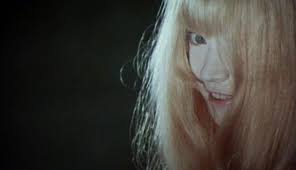
Omnibus films were much more popular in the ’60s. The problem with them is the varying quality. Spirits of the Dead (1967), for example, consisted of three Edgar Allen Poe adaptations by three (at the time) popular directors. Louis Malle’s “William Wilson” is bad, but Roger Vadim’s “Metzengerstain” is even worse. Then, comes absolute bliss, a Federico Fellini horror movie that is so damn good, so damn creepy that it deserves its own screening. Well, some fine soul on YouTube has separated the wheat from the chaff.
“Toby Dammit” is ostensibly an adaptation of Poe’s short story “Never Bet the Devil Your Head”, and it still attacks the naive notion that the world is a place of goodness with vigor and conviction. But the story and images are entirely Fellini, a concentrated microcosm of his obsessions minus the sunshine of his daydreams. I can’t recommend it highly enough. It might be his best film, the run time be damned. The last image of the devil (like Bunuel, Fellini can think of nothing scarier than a smug little girl) waiting for the “ball” to bounce her way is etched into my memory. Watch it here.
I, Madman (1989)
Since its release in 1995, John Carpenter’s In the Mouth of Madness has only increased in popularity. I’m glad. I like the film’s effects, and Carpenter’s commitment to the loopy story (he’s rarely sold out to good-taste mongers) is admirable. But I’m not quite as crazy about the movie as most people. The intensity tends to waver; perhaps a bit of focus would have done the film some good. Besides, a far better story of evil literature coming to life and tormenting unsuspecting readers came out a few years earlier.
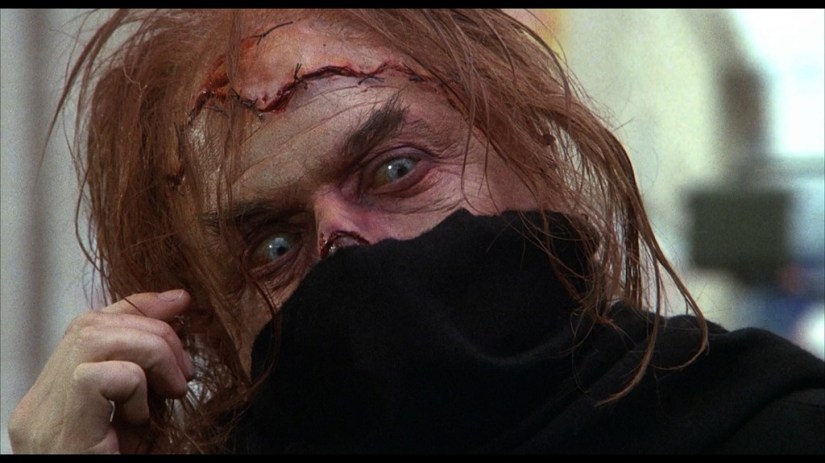
Stylish and suspenseful, Tibor Takács’s inspired slasher, I, Madman is about an actress (Jenny Wright) who enjoys reading horror books so much that she tends to lose herself in the plot. The plot in which she’s currently embroiled concerns a mad scientist who fuses jackals with monkeys. He also likes to steal body parts and graft them onto himself. Things get dicey when her friends start to…lose things.
I, Madman gets a lot of mileage out of its female lead curling up in her lonely apartment and daring herself to open up her trashy novel one more time. The villain is terrific and the effects are endearing. A ton of fun. It’s free on Tubi.
Night of the Demon [AKA Curse of the Demon] (1957)
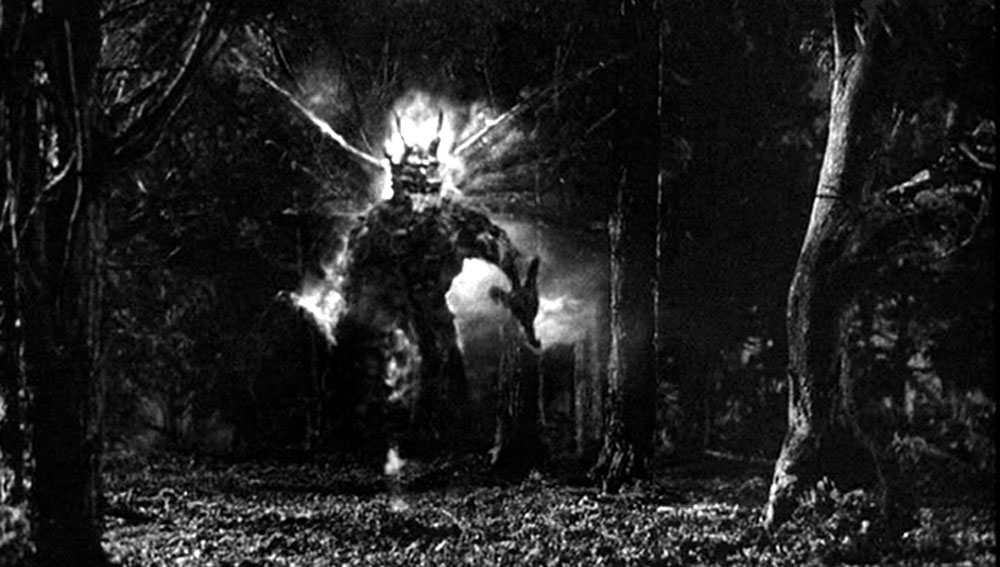
A real treat, Jacques Tournier’s Night of the Demon is probably the best-known film on this list. Any of Tournier’s work with Val Lewton (The Leopard Man, Cat People, I Walked with a Zombie) could be part of your Halloween viewing, but fans would no doubt go with this beloved British production.
The story concerns an ancient rune that…Oh, who cares. It’s about the threat of a demon ripping people to shreds and it’s fabulous. There’s no budget and the monster is as fake as any other 50s monster, but Tournier knew how to squeeze every last drop of fright out of the material. He didn’t want to show the monster, but producer Hal E. Chester demanded it. I can see Tournier’s point, but the two monster sequences pair marvelously with all the moody dread. It’s superb and free on Dailymotion.
The Borrower (1991)
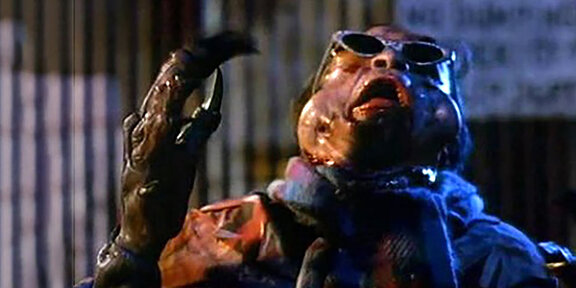
More than a little derivative of other murderous aliens on Earth sci-fi/horror films (including Jack Sholder’s magnificent The Hidden), John McNaughton’s The Borrower, a funky and observant portrait of an alien terrorizing an urban neighborhood, manages to give us a fresh take on the subgenre.
The Chicago born and raised McNaughton’s Henry: Portrait of a Serial Killer (1986) stunned critics and pissed off the MPAA. The ensuing battles over censorship prevented the film from getting the immediate respect it deserved. In the meantime, McNaughton quickly became typecast.
“I was broke and got sent bad horror script after bad horror script. Then came The Borrower, which in some sense was also a bad horror script, but the conceit that this creature takes the heads off of people and somehow occupies their lives was like a metaphor for what actors do. That gave me something to take hold of, other than just the monster that jumps up from behind a tree to scare you and eat you.”
The film was destined to vanish without a trace, but thanks to the Music Box Theater, it was rescued. After showing some reluctance over its release, Cannon Films leased out a print of The Borrower to Chicago’s Music Box Theatre, whose booker Sandy Chaney had sought the film for two years, and where Henry: Portrait of a Serial Killer had run for 18 months. When Cannon turned down the Music Box’s request for a print, Chaney came up with a novel variation on the theme: The Music Box would advance Cannon the $1,500 required to strike a new print against rentals, the box-office cut the company was due to receive. No investment would be required on Cannon’s part. If the movie took off, the company would be riding high. If it failed, it would walk away with a free print. After an enthusiastic response from the Music Box run (and a rave from critic Dave Kehr), Cannon struck more prints for additional markets; the film was also shown at the 1991 Toronto International Film Festival (which the company previously turned down) as part of their Midnight Madness screenings.
It’s not the most frightening film you’ve ever seen, but it’s a damn good movie and free on YouTube.
Images (1972)
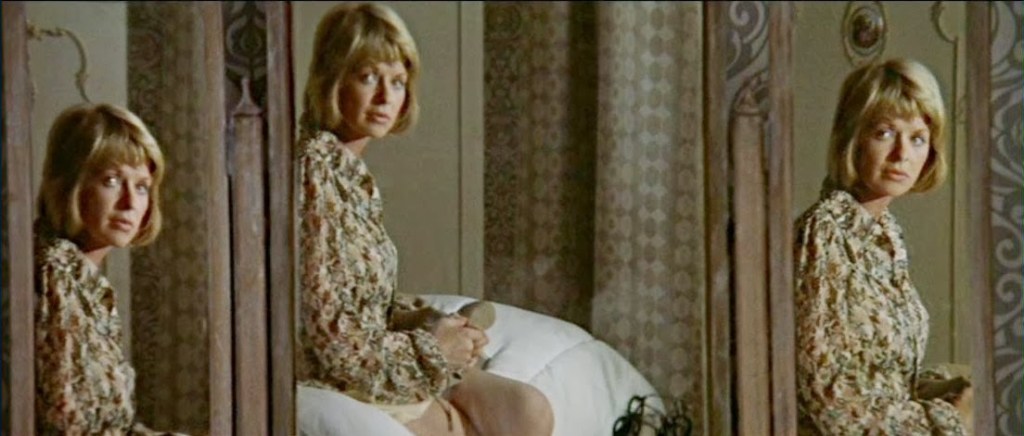
Robert Altman’s Images is the type of film I tend to dislike–the reality/fantasy schism of a schizophrenic mind. The problem with such films is that nothing matters plotwise because it’s all happening inside the character’s mind. How can I invest in something that probably isn’t real? Images gets past this problem quickly as we soon realize 1. Susannah York (best actress winner at Cannes) has created an indelible portrait of a woman who is mad but not “crazy” and 2. The film itself is so well-made that the precise psychology can be followed by an attentive viewer.
Cathryn is a pregnant author writing a children’s book called In Search of Unicorns. She’s also incredibly unhappy with her choices in life. Images is less about schizophrenia and more about the moment we wake up realizing that we are a different person than we were the day before. Cleaning up the previous life is messy, but it’s better than dealing with dangerous emotions, the kind of emotions that produce a pile of bodies in the living room. With an amazing score and typically striking photography by Vilmos Zsigmond, Images is insanely watchable considering how many times its narrative rug is pulled from under the viewer — sometimes it’s every twenty seconds.
And York is really something. She almost didn’t play the role. After finding out she was pregnant, she told the director she had to bow out. In typical Altman fashion, he said, “Wonderful! We’ll make Cathryn pregnant!” York kept a detailed journal of her character to make sure she knew where the character was mentally at all times. She even wrote the children’s book from the film. I’m serious — you can buy it here. And of course, you can watch the film here.
Cat People (1982)
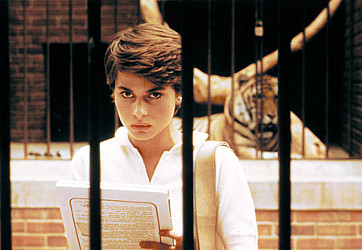
Film # 17 on my list of recommendations is Paul Schrader’s remake of Cat People (1982). Schrader writes and films like a naive lad who has only just discovered the existence of hardcore pornography and now is desperately looking for his lost Spirit. He looked at Jacques Tournier’s original film (highly recommended) and decided to double the violence and quadruple the sexuality. Critics at the time were fairly unimpressed and after a decent run on cable, it has seemingly vanished.
Too bad. This lurid tale of feline incest is impressive as hell. The central performances of Malcolm Mcdowell and Nastassja Kinski are pitch-perfect. The humans are pretty good too. The soundtrack (Bowie) is awesome and the whole affair is hypnotically permeated with erotic peril. During the pool scene, DP John Bailey decided to mimic the original because he couldn’t improve it. It still works.
Tournier was a poet who suggested the worst and allowed his audience to fill in the gaps. Schrader admires poetry (there’s a lot of it in Kinski’s eyes), but you don’t need to fill in many gaps as this scene demonstrates.
What’s the Matter with Helen? (1971)
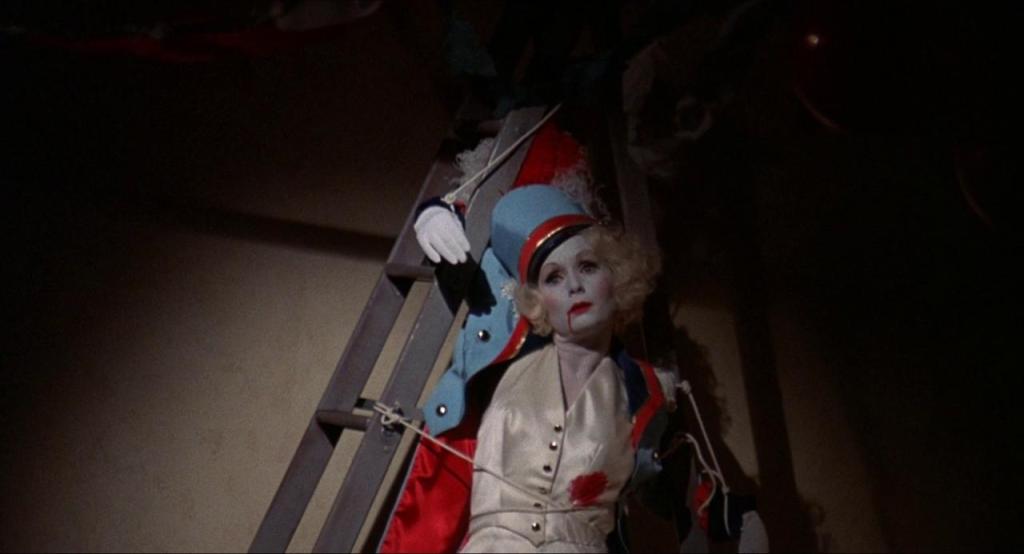
I don’t like camp. The word itself frightens me. If you’ve ever pushed a story to extremes, you’ve likely touched camp or at least gotten a little of it on your shoe. So why am I including What’s the Matter with Helen? on my list? God only knows.
It’s the 1930s, and Helen and Adele are brought together by the violent tendencies of their sons. Both boys have just been put away for a brutal murder. Helen seems to think the victim was a stand-in for herself and Adele. She’s probably right. These ladies have problems. They move to California to restart their lives, but a friend of the victim follows them seeking revenge.
Meanwhile, things start going well for Adele and not so well for Helen. Adele can brush off her guilt, finding a silver-haired gentleman with dough, whilst Helen demands atonement for sins. What follows is a menopausal, metaphysical mystery (very popular at the time) featuring two washed-up hags…I mean, classic actresses making themselves ugly and battling it out with knives, axes, and other household implements. I actually prefer this to the far more popular Whatever Happened to Baby Jane and Hush, Hush, Sweet Charlotte though the black and white photography of those films might suit this material better. Then again, Lucien Ballard photographed What’s the Matter with Helen? and that guy actually photographed films during the 1930s–the time period when the film was set. He does great work to make this feel like an old-fashioned horror movie. And Shelley Winters looks just as wonderful when she’s ugly as Bette Davis did. By the time she’s playing the piano and cackling next to a corpse, she’s comfortably within her element. I’m not saying this is great work, but no film with Agnes Moorehead, Timothy Carey, and Harry Dean Stanton can be altogether bad.
If you’re a pussy who can’t take many of the horrors I’ve recommended, but you’d still like to watch something appropriate for Halloween, you can watch What’s the Matter with Helen? on YouTube.
Oh, by the way, there was a scene of Winters kissing Debbie Reynolds (no campy horror film can exist without a gay subtext), but it was removed because the film would have received an R rating. I didn’t make that up.
Onibaba (1964)
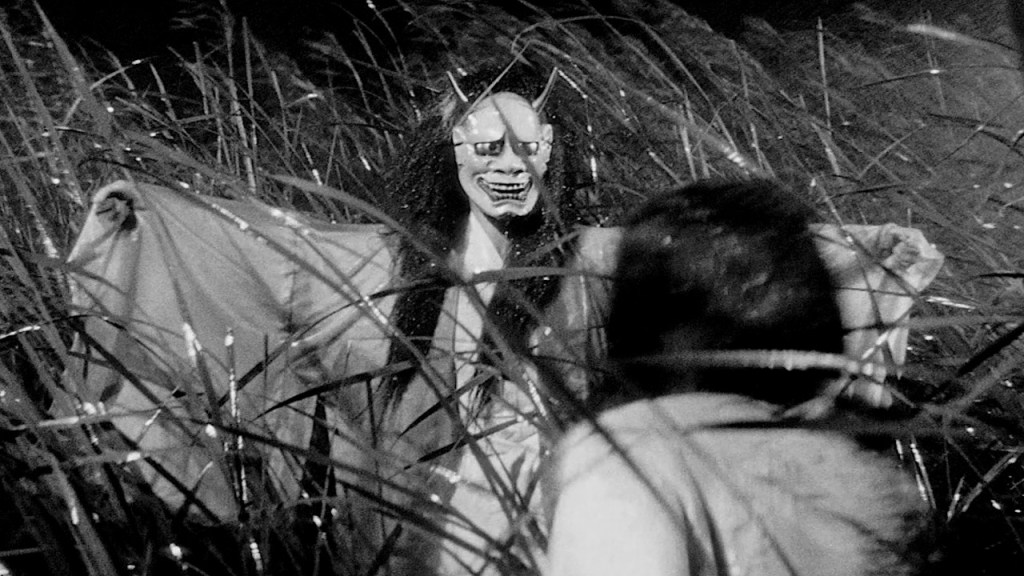
Kaneto Shindo’s Onibaba is a poetic parable, gorgeously photographed and acted about two women in medieval Japan who live in a field of endless, tall reeds. Their livelihood depends on runaway soldiers who foolishly enter the reeds, dreaming of escape. They don’t last long. The women (a mother and her daughter-in-law) murder anyone who enters their domain and steal their possessions.
When the daughter-in-law falls in love, the mother panics. Without assistance, she won’t be able to murder and steal. She adopts a disguise (a mask she has stolen from a hideously deformed samurai) and tries to scare the younger woman into staying. The results are horrifying.
Onibaba gets a little too Twilight Zoneish for my taste (I’m sure you can guess where this is going long before it gets there), but that’s not what makes it such an enjoyable and creepy film. Kwaidon (1964) seems to be the most popular 60s Japanese horror film in the West (and it’s great), but if you haven’t seen this one, give it a shot. You can watch it on YouTube.
Daughters of Darkness (1971)
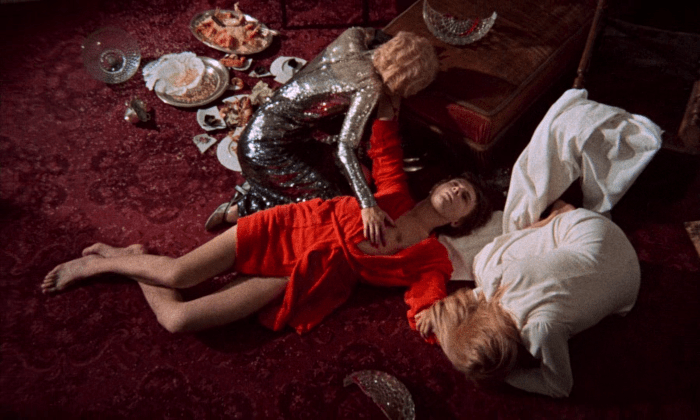
Geoffrey O’Brien’s description of Daughters of Darkness sums it up perfectly — both the film and why it’s on my list.
“Lesbian vampires made frequent incursions in the early 1970s—in movies ranging from hardcore pornographic to dreamily aesthetic — as the Gothic horror movie took to flaunting its psychosexual subtexts. Daughters of Darkness leans flamboyantly toward the artistic end of the spectrum, with Delphine Seyrig sporting Marienbad-like costumes and the Belgian director conjuring up images of luxurious decadence replete with feathers, mirrors, and long, winding hotel corridors. At the film’s core, however, is a deeply unpleasant evocation of a war of nerves between Seyrig’s vampire and the bourgeois newlyweds into whose honeymoon she insinuates herself. Jaded age preys cunningly on narcissistic youth, and seductiveness and cruelty become indistinguishable as Seyrig forces the innocents to become aware of their own capacity for monstrous behavior. If Fassbinder had made a vampire movie it might have looked something like this.”
I love Sternberg, I love Dietrich, I love Seyrig, and I love Fassbinder. God, why didn’t Rainer Werner Fassbinder make a vampire movie? Anyway, there’s no amount of yapping I can do that is better than what Geoffrey said. You can watch Daughters of Darkness on YouTube.
Near Dark (1987)
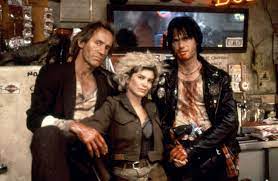
Since the vampire seems to represent so many of society’s issues, it’s my duty to tell you about Near Dark‘s themes of outsiders forming a family and blah, blah, blah. This is a kick-ass vampire movie with a scene inside a bar that will turn your blood cold. Kathryn Bigelow directs in her typically muscular fashion, burying the subtext under adroitly directed action. You’ll never even notice the message, but you’ll find yourself strangely invested in the bloody goings-on. She ripped the vampire story from its gothic chains and God bless her for doing it. Great cast too. You can watch the trailer here.
Survival of the Dead (2009)
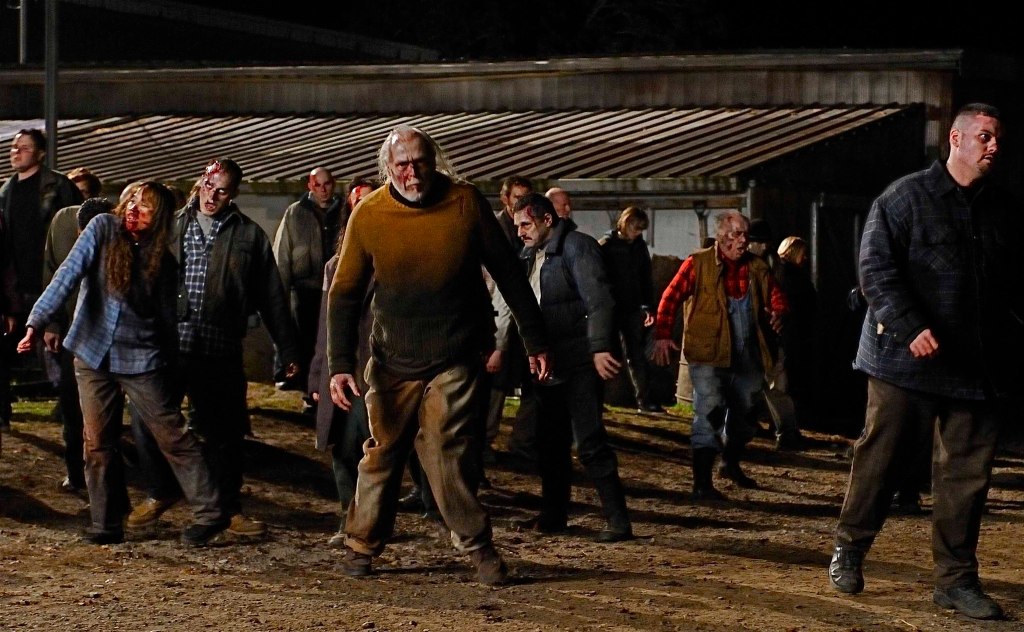
Believe it or not, George Romero’s work is disappearing. Not because it isn’t popular, but rather because a bunch of creeps have decided to lump all zombies together. I watched two episodes of The Walking Dead and called it a day. It’s not the same thing. For the uninitiated, here’s a recap:
Night of the Living Dead (1968) had a lot on its mind. The destruction of the family — emotional succor becomes literally devouring with the daughter eating her parents. The inability of groups to work together — Romero was a socialist and this is a theme he would return to again and again. Racism — Duane Jones was one of the few black actors heading a cast in 1968. You could write a long essay about the buried themes in Night. It’s expertly directed and chillingly claustrophobic. Romero didn’t make a dime from the film. The copyright was in question and like a lot of low-budget affairs, the mafia took most of the profits.
Dawn of the Dead (1979) is considered by many to be Romero’s masterpiece. He’s working in color and has Tom Savini doing the gory effects. More than that, his canvas has increased. The shopping mall becomes a capitalist shooting range/funhouse. The difference between the dead and the living is thinner than a ghost’s shadow. Romero was offered a budget if he guaranteed an R rating. Rather than selling out, he made his vision, got an X rating, and made very little from the film. There’s a pattern developing here.
Day of the Dead (1985) was meant to feature zombies in the White House (!), but again, Romero eschewed a budget because he would not deliver a neutered, R-rated zombie movie. Instead, the film takes place inside a cavern (caverns don’t cost money) and was released without a rating. The theme this time is the battle between the scientific community (impractical) and the military-industrial complex (barbaric). This time, he not only didn’t make money, but he didn’t get the critical support of the previous films (time has corrected this somewhat).
Land of the Dead (2005) saw our beloved George finally compromise. He was broke and in need of work. He made a neutered zombie movie. It’s not bad (his intelligence shines through in several sequences) but it is the worst of his zombie films. There is a theme about the rich (billionaires are evil, blah, blah blah), but it’s ineffectual and half-hearted.
Diary of the Dead (2007) brought George back to independence with a tale of media censorship and ineffective government response. Sound familiar? He presented the film as found footage, but that choice had nothing to do with the typical reasons for the format — immediacy. The problem inherent in such films (Why don’t these idiots just put down the camera and run?) is solved by making the film about the modern-day soullessness of people who live online. Although he didn’t make any money, Romero did find his way into the critics’ good graces once again.
Finally, we come to my recommendation (though I may have sneakily recommended all of these films), Survival of the Dead, Romero’s last zombie movie and his last movie of any kind. This movie was not a hit with critics or the public. The consensus seemed to be that the old man had desperately gone back to the well and drawn a pile of dogshit. Nothing could be further from the truth. This is a fine Western (!) that shows our survivors trying desperately to hold onto the failed tribalism of the past. Romero asks (as he constantly did throughout his life) What does it mean to be human? Most of our current answers include cruelty and control.
Romero was a socialist. I am not, but I recognize great filmmaking when I see it. His politics are strewn throughout his work in intelligent, provocative ways. If you have sworn off all zombie movies because you watched 10 minutes of a CGI undead running around and it made you sick, I would urge you to watch the real deal. Here’s the trailer for Survival of the Dead.
The Black Cat (1990)
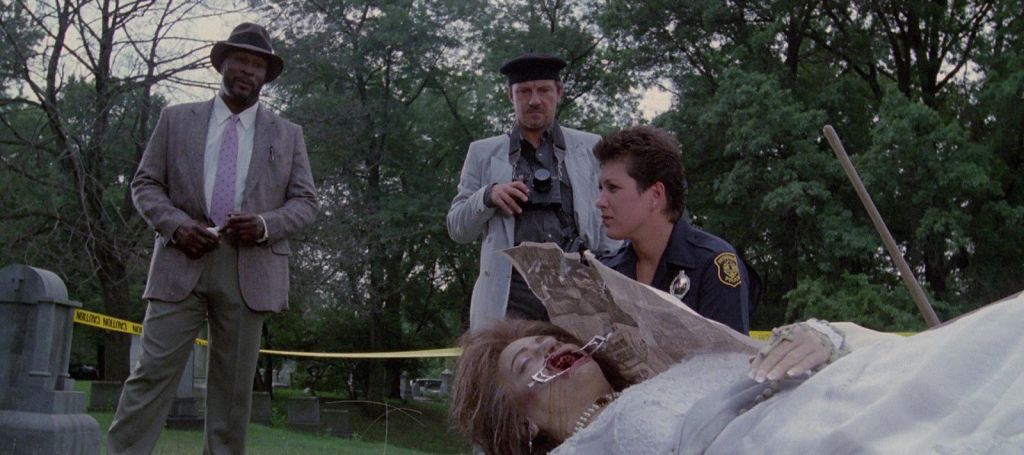
We all know that Edgar G. Ulmer’s The Black Cat (1934) is one of the great horror films. Did you know there’s another fantastic movie with that title? It’s a short film. No, it’s not the segment from Tales From the Darkside (1990) though that isn’t half-bad. It’s the second half of a Poe adaptation called Two Evil Eyes (1990). The first half is a George Romero piece entitled The Facts in the Case of M. Valdemar which is not good at all. It’s not so much that it’s terrible but rather that it is hopelessly bland. The second half is a masterful film by Dario Argento. I often hear people say that either Phenomena (1984) or Opera (1987) is Argento’s last good film. I’m here to tell you it’s The Black Cat.
Harvey Keitel stars as a police photographer obsessed with the violent images he comes across. After his girlfriend adopts a black cat, the photographer develops a hatred for felines. He murders the animal, but that darn cat just won’t stay dead. The story (filled with Poe references) turns incredibly brutal. This is strong stuff, not pleasantly ghoulish, and I’ve already mentioned the feline homicide–you’ve been warned.
Two Evil Eyes is free to watch here. Just skip past the first half to The Black Cat.
Cigarette Burns (2005)
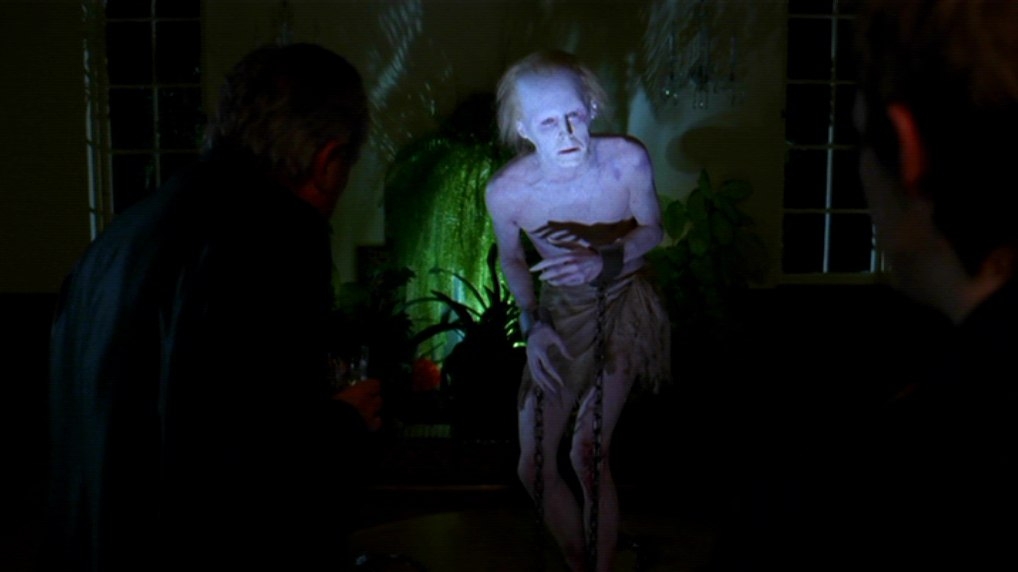
The Showtime series Masters of Horror produced some fine films. I loved Joe Dante’s Homecoming which featured zombie soldiers coming back to vote against the war. The best segment, however, was clearly John Carpenter’s stunning return to form, Cigarette Burns.
A film archivist attempts to find a notorious film that has vanished. Why did it vanish? Because anyone who watched it went on a murderous rampage. Apparently, it was a snuff film. The victim was an angel. You heard me correctly. Watching an angel being slaughtered will cause you to go mad.
Cigarette Burns is also strong stuff, but you probably won’t kill people after you see it. No promises though. You can watch it here.
Mad Love [AKA The Hands of Orloc] (1935)
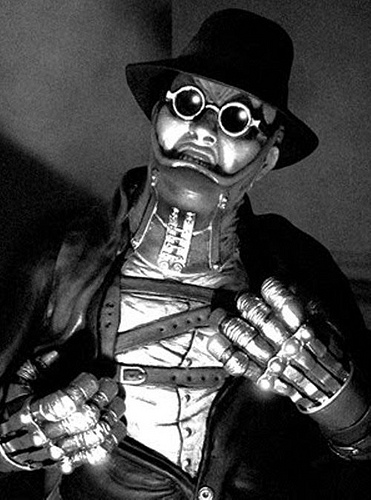
Karl Freund’s delirious thriller is about a transplant gone wrong. Stephen Orloc loses his hands in a train accident. The mad doctor (played deliciously by Peter Lorre) gives him two hands taken from a murderer named Rollo. While Stephen begins hallucinating and throwing knives at people when he gets angry, Lorre tries to move in on his wife. When “Rollo” comes back to life and begins tormenting Stephen, the picture really takes off. Here’s the trailer.
Body Snatchers (1993)
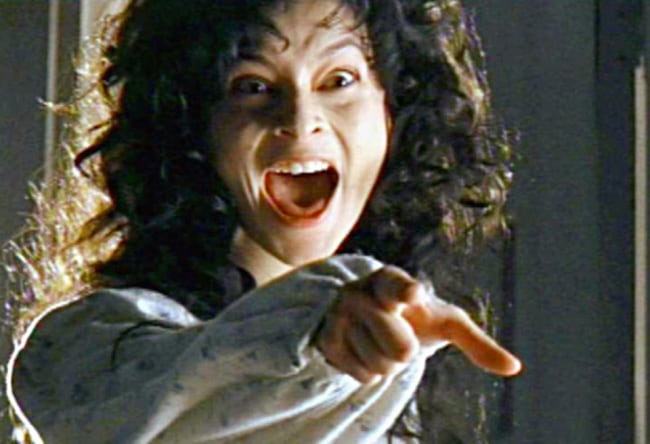
Don Siegal’s Invasion of the Body Snatchers (1956) was a powerful expression of anticommunist paranoia in much the same way that The Parallax View (1974) reflected the post-Watergate feel. Philip Kauffman’s remake (1978) was a critique of the Me Generation narcissism of its time. Most of the characters are trying to find themselves. What better way to start than numbing yourself completely.
I’ve chosen Abel Ferrara’s Body Snatchers (the second of his films on my list!) because it gets little respect compared to the other two. (The fourth adaptation, The Invasion [2007] toys with a provocative idea–that becoming a pod person is actually the correct decision–before dropping it and being a dumb action movie.) Body Snatchers is further from Jack FInney’s novel than the previous two. It takes place on an army base with the pod people taking advantage of the conformist atmosphere.
There’s also a strong feminine subtext. It is the women who are turned first, almost as if that’s the ideal way to destroy the family bonds. Meg Tilly’s turn as the pod wife is something special. And the film is great, moody fun. As a horror film, it certainly delivers the goods. You can watch it here.
Death Walks on High Heels (1971)
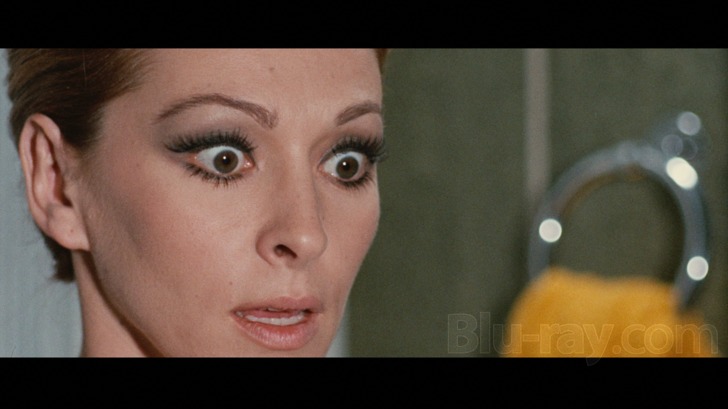
A sexy, funny, and scary example of the Giallo genre. As a whodunnit, it plays fast and loose, as a thriller, it cannot keep its tone straight, and as a plot-driven mystery, it could not care less about consistency. Who cares? It features the beautiful (and often naked) Nieves Navarro, stylish cinematography, and a diabolical killer. Turn off your brain and enjoy. You can watch it here.
The Masque of the Red Death (1964)
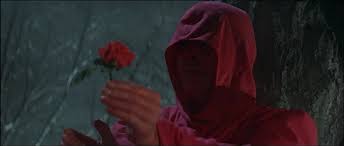
A study in intellectual evil, gorgeously shot by Nicolas Roeg, this Roger Corman classic is the best Poe adaptation on film. Prince Prospero stows himself away in a castle to keep away the Plague. Death cannot be deterred by castle walls. This was not a financial success due to it being so artsy-fartsy. What the film lost in immediate box-office receipts, it has more than made up for with reputation. Superb. You can watch it here.
Alice Sweet Alice [AKA Holy Terror, AKA The Mask Murders, AKA Communion, They had no idea what to call this film, did they?] (1976)
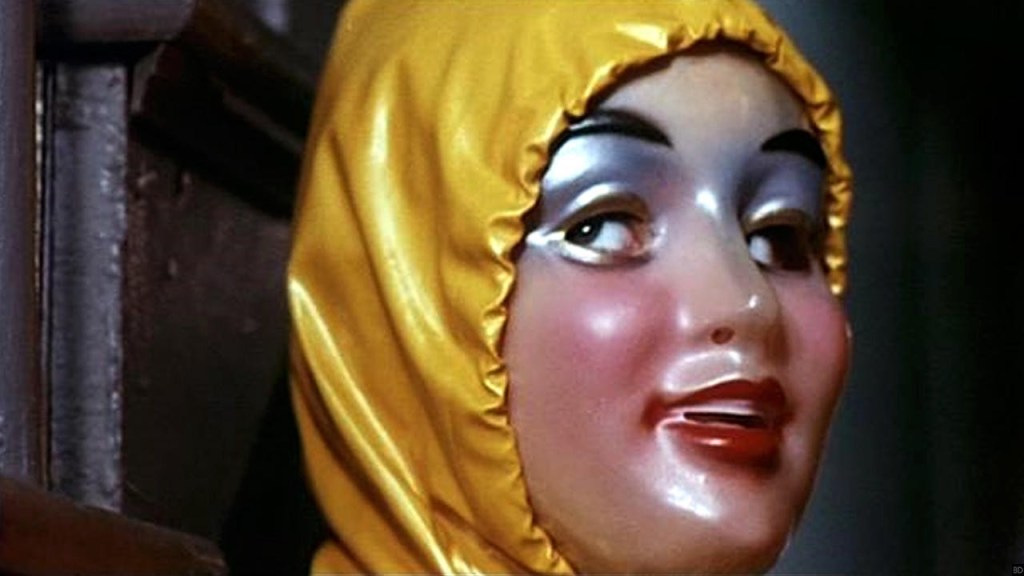
A true American Giallo (there aren’t many) right down to the bonkers motive for the killer. This film scared the shit out of me when I was a kid. A recent viewing scared the shit out of me again. That’s rare. Highly recommended if you like that sort of thing. You can watch it on YouTube.
Mystery of the Wax Museum (1933)
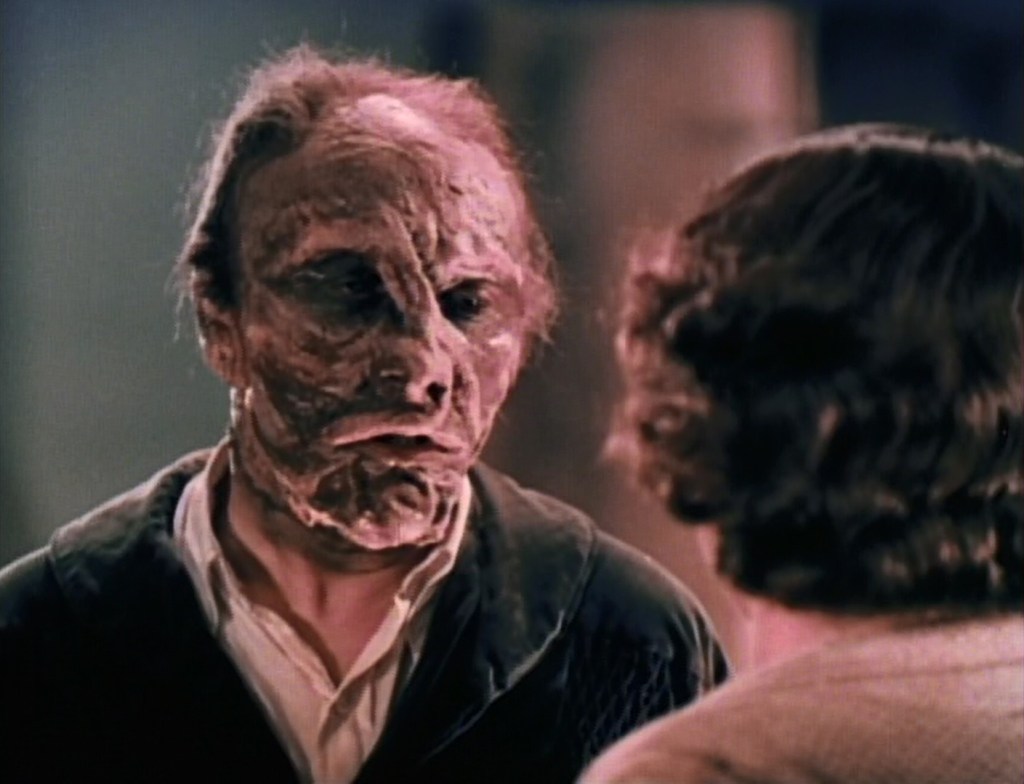
It’s so strange. Let’s go in reverse order. 2005’s House of Wax is an awful movie with a stunning climax. I’m serious the ending is out of sight. 1953’s House of Wax is a good film with a decent climax. 1933’s The Mystery of the Wax Museum is a brilliant film with a blah climax. So damn strange. Anyway, I highly recommend it, despite the subpar finish. Here’s the trailer.
Torso (1973)
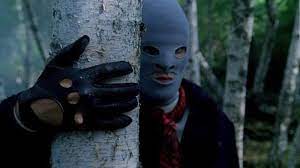
The first section of Torso can be a stretch for some. All I would ask is that you stay with it. Eventually, we get to the house where all the action takes place. Several women are staying at a villa. One of them goes to bed early. She’s lucky because someone kills all her friends. She wakes up the next morning and hears a strange noise. You’ll have to watch to find out what it is (hint–read the title), and from here on out, the film is brilliant. Highly suspenseful. You can watch it here.
Flesh Eating Film Reels (1975)
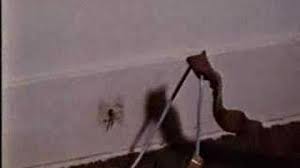
I’ve given you 31 horror films for the 31 days of October. Here’s a bonus. Often shown on HBO during the early 80s, this short terrified me. I recently saw it again and er…not so much anymore. You can watch it on YouTube if you dare!

 James Scott Byrnside
I recall renting Scarecrows for 99 cents at a Showtime Video back around 1995. Some really creepy cinematography.
Inside is a top 10 horror film in my book, and one of the few French horror movies from the time that actually delivered on the haute tension (see what I did there?). That final scene…
LikeLiked by 1 person
Maybe I’m imagining it, but I seem to recall another movie about killer Scarecrows that was also super low budget, released straight to video, and surprisingly good.
Well played. I did like the cannibal movie Raw (2016), but Inside is clearly the gold standard when it comes to French horror. I might even agree with you about it being top 10. It’s a special film.
LikeLike
I actually used to like horror, but I’ve had it with gore. Can you recommend any of these to me that will excite without turning my delicate stomach? (I’m especially interested in the giallos.)
LikeLike
If Gialli on the milder side are what you’re interested in, I’d recommend Blood and Black Lace (1964) https://www.youtube.com/watch?v=6S7Y2Hs8mbU , The Fifth Chord (1971) https://tubitv.com/movies/692132/the-fifth-cord , and The Black Belly of the Tarantula (1971) — https://tubitv.com/movies/534185/the-black-belly-of-the-tarantula
These aren’t violence-free, but they’re far less gory than their brethren. I think Blood and Black Lace might be the closest thing to the sort of mystery we like. It’s gruesome but the effects are held back by the time. The other two are genuinely good cinematic mysteries that have little to do with shock value or bloodletting. If you watch them, let me know what you think.
LikeLiked by 1 person
Thank you for this great list, Sir. Some of these films were unknown to me, and I’m looking forward to watching them. I’m especially pleased, that you included The Tenant, one of my favorites. However, I noticed a tiny little error regarding Death Walks on High Heels. The movie does not feature Edwige Fenech. The leading lady is Nieves Navarro, or Susan Scott as she is billed here, who was also married to the director Luciano Ercoli.
LikeLike
That’s not a tiny little error. It’s huge. Thank you for the correction. It’s been a while since I saw these films and I can’t remember Mrs. Wardh from Adam. I’ll correct it today.
LikeLiked by 1 person