Naked Lunch (1991)
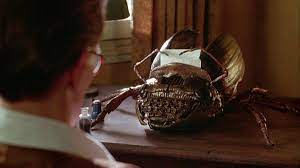
Burroughs explained the title Naked Lunch as, “A frozen moment when everyone sees what is on the end of every fork.” The naked lunch served up in Naked Lunch is the moment a man realizes he is homosexual, but married to a woman he half-despises and both of them are hooked to the gills. And he has to write.
I can’t tell you how guilty writing makes you feel. If you don’t do it often enough or you hit a rough spell without any progress, you feel like the biggest piece of shit.
Through the years, many filmmakers held preliminary meetings about filming Naked Lunch, but no one dared do it, citing the expense and the probable banning in every country. Cronenberg claims he was struggling with the script right up until a few days before the beginning of the shoot. He threw out the script (unfilmable and unshowable) and whipped up a story about the writing of the book. Because Burroughs was an addict, the elements inside the book (costumes and sets that had already been created) could be used as halucinations or visions in Burroughs’s own life.
I seriously doubt Cronenber’s account happened exactly that way, but whatever. He decided to jettison the character’s homosexuality, something Burroughs would criticize. In the end, it didn’t matter much because there was enough homoeroticism to suggest its pervasiveness. This a film about creation and the muse. It’s also a fusion of Cronenberg and Burroughs. If they went into the teleport pods together, this might be what it looks like. It’s devastating. It’s sad. It’s funny.
My Own Private Idaho (1991)
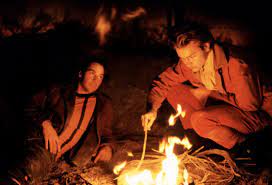
Gus Van Sant embraced the road movie like he was Wim Wenders. River Phoenix and Keanu Reeves are perfect as the odd couple of runaway hustlers. The pain behind both characters (and especialy the ways in which it is revealed) is unforced. Compare this to Good Will Hunting (1997) where the character reveals are supremely calculated and announced with a fucking bullhorn.
The Shakespearean affectation might bother you, but like the New York accents in The Last Temptation of Christ (1988), it is the filmmaker’s prerogative to get to the point the best way he knows how. Deal with it, cupcake.
Fast, Cheap, and Out of Control (1997)

Errol Morris’s epic documentary about modern day Frankensteins. I adore documentaries with elusive subject matter. So many of them are formatted to within an inch of their 2-hours lives that it’s refreshing to see one linger on the poetic nature of its subject without ever really putting it into words.
Crash (1996)
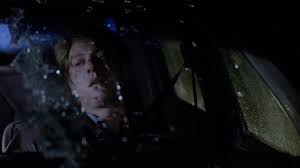
David Cronenberg and J.G. Ballard team up with this tale about technology and perversity. Norm Macdonald once joked that he never realized when he was a child that people would someday need a computer just to jerk off. Crash extrapolates that joke to a logical conclusion and then takes it seriously. Eroticism is simply a response in the brain and people have long found strange things erotic through brain abnormalities–though normal is a difficult thing to define. Murder, feet, fur–plenty of “inappropriate” input has caused a hard-on. Why not car crashes? Spader’s character is initally drawn by the erotic nature of escaping death, but soon, like all fetishists, he finds his crowd and the thing itself becomes addictive rather than the impetus behind it. It takes more and more to reach orgasm.
Eyes Wide Shut (1999)

I’m not sure how to watch Eyes Wide Shut. It might be a comedy about blue balls or a horror film about blue balls. Either way, it’s hypnotic and filled with the lovely sort of redolent details that remain in the room long after it’s over.
Cape Fear (1991)
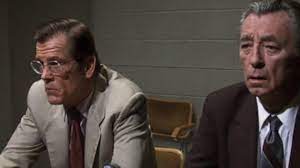
The single most underrated film of the decade. At the time of its release, this was seen as a genre exercise, a chance for Martin Scorsese to flex his muscles while still doing something vaguely personal. This requires a reading of the film that severly hinders its strengths and I just don’t understand. That’s not completely true. I understand it a little. Cape Fear is a morality play in thriller’s clothing. It hits the right notes, but watching this film as an exercise in suspense will leave a lot to be desire. As an examination of sins from the past making themselves relevant in the present, the film makes perfect sense.
In fact, I’d say the baptism at the end only makes sense if you see the film as metaphor. As a thriller, it’s wordy, unfocused, half overly-stylized, half incompetent, and wholly self-indulgent. As a continuing examination of guilt in Scorsese’s long career, it’s a masterpiece. And Robert Mitchum aside, it beats the shit out of Thompson’s original, a competent thriller with only menace on its mind.
The Grifters (1990)

I recall the most common criticism of Stephen Frears’s The Grifters (1990) being its unsure sense of place and time. A lot of critics complained (for instance) that the elevator in John Cusack’s apartment belonged in the 1950s while the racetracks and bars were clearly 1990s L.A. I don’t know why this was an issue. The Grifters has an assured sense of time and place–the last vestige of flesh inside the characters’ hearts just as blackness takes over. It’s a tale of one small-time con artist happily flitting about the seedier parts of LA and two small-time con artists looking for much bigger game. Guess who’s the patsy.
It’s also a wonderfully stylized crime film that stands with the best Hollywood has ever produced and a shadowy valentine to the prose of its author Jim Thompson. Even if the three central leads were off, there would be enough meat on the supporting performances to recommend the film. Look at Pat Hingle threatening to rearrange Anjelica Huston’s guts (and not in the good way that you kids are thinking) or the great J.T. Walsh in an insane flashback. Stephen Toblowski, Eddie Jones, Charles Napier–this thing is packed with talent.
The main players are outstanding. Annette Bening and John Cusack are more than game to deliver the smart dialogue and the sexual energy. I recall hearing complaints from critics that Cusack was miscast, but his subtle shades of naivety are crucial to both his character and the plot.
And then there is Anjelica Huston whose work in this might just be my favorite performance I’ve seen on film. She’s an animal, willing to ditch what’s left of her morals to survive, desperate to hold onto her soulless existance. The fact she also starred in Nicolas Roeg’s The Witches (1990) in the same year is enough for me to say that no actor has had a better year. And that old saying about “running the gamut of human emotion”–it’s here. Look at her beg, look at her seduce, look at her beat the shit out of the drunk stiff who tries to sit next to her. This is like the ultimate game of “fuck me, kill me”.
I saw this film at the theater as a teenager. I remember a man exiting into the hall at the same time I did and loudly proclaiming this to be the “stupidest” movie he had ever seen. It was then I realized there was something else The Grifters got absolutely correct — some people are real scumbags.
The Thin Red Line (1998)

Terrence Malick’s gorgeous film about the human toll for the capture of a little bit of land in the Southern Pacific can stop its brilliantly realized action scenes to capture the image of a bloody bird dying in the dirt. If Saving Private Ryan was as competent with its soul as it was with its effects, it might look a little like The Thin Red Line.
Santa Sangre (1990)
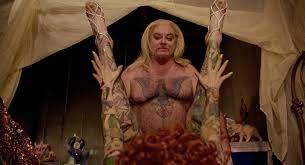
I shouldn’t like this film. Alejandro Jodorowsky directs with a sledgehammer and underlines the meaning of every fucking scene (!!) and yet, I adore it. And even if you don’t like it, you have to admit that the imagery is unique and completely arresting.
Schizopolis (1996)

I saw this film once and I was on acid. I enjoyed it immensely. Obviously, you should consider my recommendation with a truckload of salt…or procure some acid. Either way, Steven Soderbergh’s escape from his shackles is highly entertaining.
My favorite films of the 1930s
My favorite films of the 1960s
My favorite films of the 1970s
My favorite films of the 1980s

 James Scott Byrnside
2 thoughts on “My favorite films of the 90s”