Last year I posted a list of Halloween recommendations which you can read here. It’s that time of year again. This should not be taken as a “the greatest horror movies ever” sort of list. They’re just films I enjoy and recommend. I’ve tried to pick things that aren’t obvious. Some of these films are subtextual masterpieces, others merely fun rides. A few might be considered guilty pleasures. I’ve included links when possible. Obviously, the links can be removed or unavailable in countries other than my own. I’ve chosen a wide variety of films and styles. I hope there’s one you haven’t seen that you end up watching for spooky season. And if you don’t like horror movies? That’s your problem. Get some help.
If you’re wondering where all the murder mystery writing stuff is — don’t fret. I’m writing nearly every day and I’m excited about the upcoming publication. Updates will be given soon. Like everything else, it takes time and effort. Happy Halloween.
Island of Lost Souls (1932)
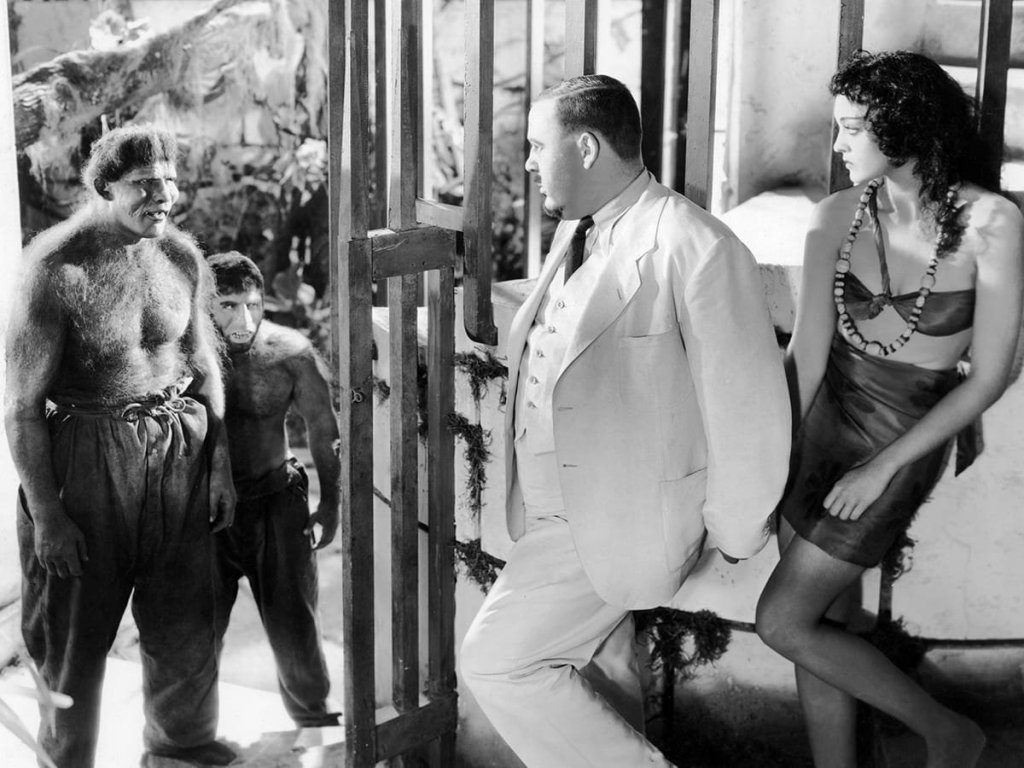
Erle C. Kenton’s film remains the best adaptation of the 1896 novel The Island of Dr. Moreau. Cinematographer Karl Struss doesn’t have the gothic staples at his disposal, yet he creates some of the most chilling atmosphere of 30s horror. As good as The Most Dangerous Game (1932) is, it doesn’t take much advantage of the jungle setting which remains non-threatening to the very end. Not so here. The setting is reflective of the horror.
But of course, the reason the film remains so very memorable is Charles Laughton who plays Moreau with the singular drive necessary to the character, but eschews any hint of sympathy, the sort that eventually bled into the performances of Francis Lederer, Burt Lancaster, Marlon Brando, and Christopher Lambert(!?!). Laughton’s fabulous. Add in vivid freaks, gruesome violence, and dangerous sexuality. Great fun. You can watch it here.
Son of Frankenstein (1939)

The popular opinion is that James Whale topped himself with 1935’s Bride of Frankenstein, a loopy, half-comedic continuation with the iconic imagery of the bride shrieking in defiance of her monstrous husband. If iconography and popular opinion are important to you, then Bride of Frankenstein is the Frankenstein film for you. I don’t care much about either. Don’t get me wrong, I think Bride is a good film. For all its inventiveness however, it doesn’t do much with the themes of Frankenstein until it’s much too late. Most of the film lacks any tension or fright. It’s downright campy. In my opinion, the best Frankenstein film ever made was Rowland V Lee’s Son of Frankenstein, a return to the grim, expressionist horror of Whale’s Frankenstein (1931) and easily the most deftly plotted of the 5 Universal Frankenstein films.
Basil Rathbone stars as Wolf Frankenstein, the rational son of Colin Clive’s famous madman. Upon returning to the castle, he is struck with the same madness that afflicted his father and, with the help of Bela Lugosi’s Ygor (a fabulous performance), brings the dead monster back to life. You can watch it here.
As a side note, the vast majority of the gags from Young Frankenstein (1974) come from this film, proving that Brooks and Wilder were well aware which Frankenstein film was the best.
Kill, Baby…Kill (1966) aka Operation Fear
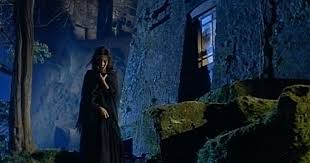
If you like gothic, Mario Bava’s ghost story is as good as it gets. In the early 1900s, a small Carpathian village is being terrorized by the ghost of a murderous little girl. That’s it. I’m still not exactly certain how this film works, but boy does it ever. It’s effects are purely cinematic. As the madness unfurls, the story develops its own sinister logic. Nothing makes any sense and yet it is supremely satisfying on a psychological level. Impressive! You can watch it here.
Stagefright (1987) aka Delirium
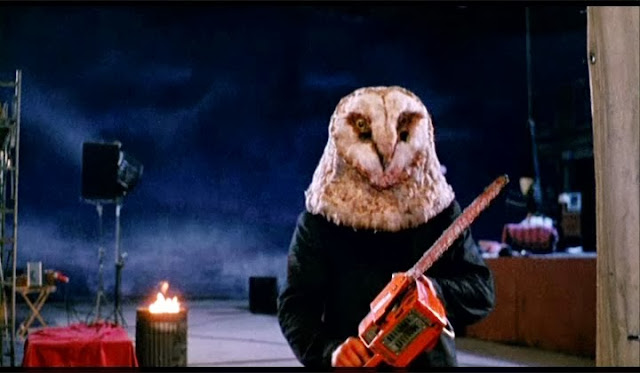
Michael Soavi’s inspired slasher is, in some ways, a variation of the “old dark house” thriller. As such, the story is just an excuse for style. But what an exercise in style this is! A bloodthirsty maniac escapes a mental institution and finds himself in a theater where an acting troupe, facing a fast-approaching opening night, are locked inside the theatre by the director so they can hammer out the fine details of the play. That’s not the only thing that gets hammered…and chainsawed. The play within the film is about a fictional mass murderer who wears an owl mask. Wouldn’t you know it, the mask fits the maniac perfectly. It’s a lot of fun. You can watch it here.
The Skin I Live in (2011)

I am not the biggest fan of Pedro Almodovar. I don’t think his films are bad by any means. He has a vision that is clearly his and I imagine his style of melodrama appeals to his fans the same way Fassbinder’s appeals to me. It’s just not quite my jam.
This film is different. I love it so much that I almost don’t trust my own opinion. Though it has clear influences (Eyes Without a Face [1959], The Face of Another [1966], Seconds [1966] Hellraiser [1986]), the horrific machinations on display are all its own. Antonio Banderas stars as a mad plastic surgeon keeping a woman prisoner in his home while he experiments on her. How this story progresses and where it ends up are absolute perfection. The sordidness ends on a scene of such stunning and sublime grace that you’ll think about it for a long time after it’s over. You can watch it here.
The Leopard Man (1943)
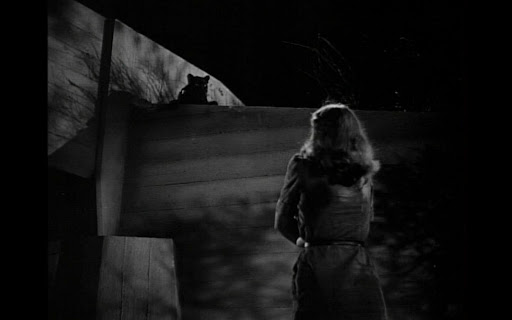
The literary conceits of mystery find a welcome home in the sounds and shadows of Jacques Tournier (Cat People [1942] Night of the Demon [1957]) who remains one of the most unsung auteurs, no doubt due to the disreputable genre he dabbled in. This (his last film for producer Val Lewton) concerns a series of violent leopard maulings in a border town in New Mexico. This is a problem because the leopard has been dead during the murder spree. You can watch it here.
Bug (2006)

Friedkin ended his career with two unbearably tense adaptations of Tracy Letts plays. The first was this high-strung depiction of two troubled souls (MIchael Shannon and Ashley Judd, both excellent) looking for a mate who will feed their psychosis. Misery may love company, but paranoia thrives off it. Both come to believe that the government has infected them with insects in an experiment to take over the world. It sounds crazy when I say it, but just wait until you hear Shannon explain it. Then, it will all make sense. You can watch it here.
The Berberian Sound Studio (2012)

Toby Jones stars as a British sound engineer who thinks he’s working on a film about horses, but soon finds out it’s an Italian giallo called The Equestrian Vortex which is about horses the same way Equus is about horses. It’s not the sort of film to which he wants his name attached, but money is money. Slowly (deliciously) he finds reality becoming the nightmare depicted in the film. This might be a bit too arty for some, but that happens with every film that looks back at a genre with a loving eye. I was delighted. You can watch it here.
The Reflecting Skin (1990)
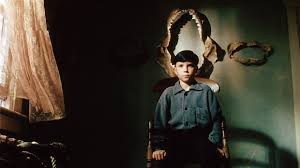
Philip Ridley’s haunting The Reflecting Skin has a tone somewhere between Flannery O’Connor and David Lynch. Though the exact events can’t be confirmed (we see everything from the eyes of a child), the horrific threats to this little 1950s prairie town are undeniable. Vampirism, child murder, and a sinister group of serial killers in a black cadillac all weave together in ways that are felt rather than explained. It’s a unique film with the succinct power of a great short story. You can watch it here.
In a Violent Nature (2024)

Chris Nash’s In a Violent Nature is transcendental. If Terrence Malick directed a slasher, this is precisely what I think it would look like. It’s the inverse of Friday the 13th (1980) and all its ilk. The problem with such films is that the characters are boring and we actually become happy when the monster start picking them off. Nash solves this problem by following the monster rather than the stupid teenagers. They’re still there, but they’re in the backgound where they belong.
There were some grumblings when this came out about the low amount of action, but I have to say, the long takes are far more interesting (and certainly more suspenseful) than jump scares. The shots of the monster travelling the forrest (after all, he can’t teleport like other monsters) are strikingly beautiful and the setting gains metaphorical power as it goes along. The last slow montage of the woods conveys a Herzogovian terror. Nature’s ability to swallow humanity and spit it out as a useless pile of scavanged bones is unparalleled.
And lest all this blabbering sound too pretentious, it’s an absolute bloodfest. There’s one murder on a cliff so savage that this veteran horror watcher had to pick his jaw off the floor. It was physically impossible (I don’t think the body would stand upright while that’s being done to it) but in the moment, who cares? Maybe future viewings will lower my estimation, but as of right now, I remain blown away by my memory of the experience. Fantastic stuff! Here’s the trailer.
The Case of the Bloody Iris (1972)

Anthony Ascott (aka Giuliano Carnimeo)’s The Case of the Bloody Iris is one of the most popular gialli of the decade. It’s easy to see why. The red herrings in this one are quite good compared to its brethren. The killer is suitably creepy, somehow able to move freely throughout the apartment complex. It’s also got Edwige Fenech. So, yeah…highly recommended. You can watch it here.
Raw (2016)
I’m not a fan of cannibal horror. There are several reasons for this, but I think the biggest one is that I’m far more interested in the personal than the cultural. Most cannibal movies are statements about cultures invaded or left behind. It’s either the jungle or the outback or the mountains, some place where civilization dares to (re)tread. Natually, they get eaten. The point of these films is usually elaborate set pieces intended to make the audience vomit.
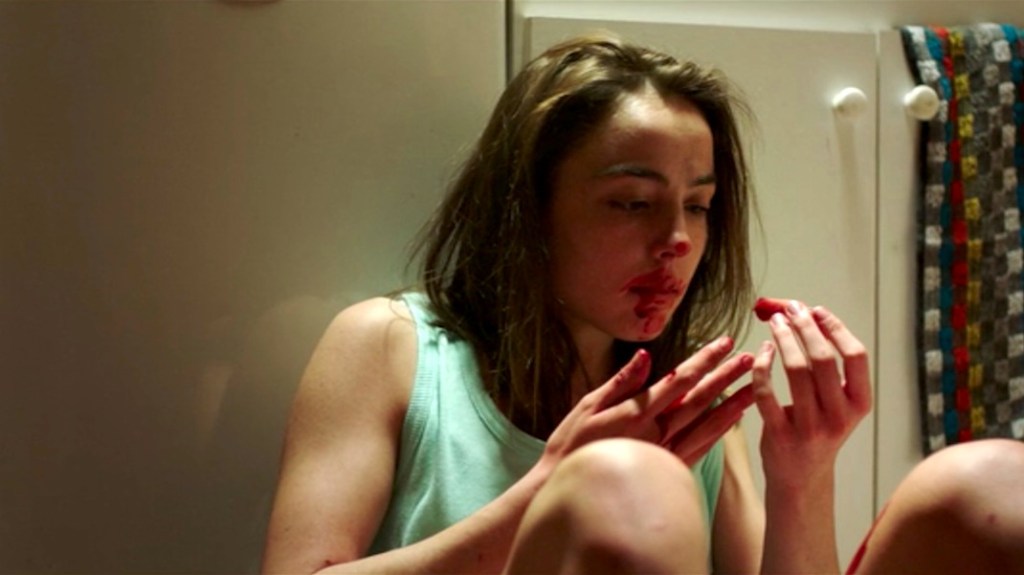
Julia Ducoumau’s Raw presents us with a coming-of-age story, centering the taboo firmly within the psychological. That doesn’t mean we aren’t mistreated with scenes of unspeakable devourment. The main character is a young vegetarian just entering veterinary school. She makes a lot of troubling discoveries about her tastes.
It’s a startling film with a firm command of sound and image. More importantly, it’s not a gross-out film. There are scenes difficult to watch, but (happily) not all of them involve literal hunger. I still haven’t seen Ducoumau’s follow up, Titane (2021), but I know it’s also a body-horror and it won the Palme d’Or. Perhaps it will make next year’s Halloween list, assuming there is a list next year. Who knows, I might get eaten. You can watch it here.
Paperhouse (1988)
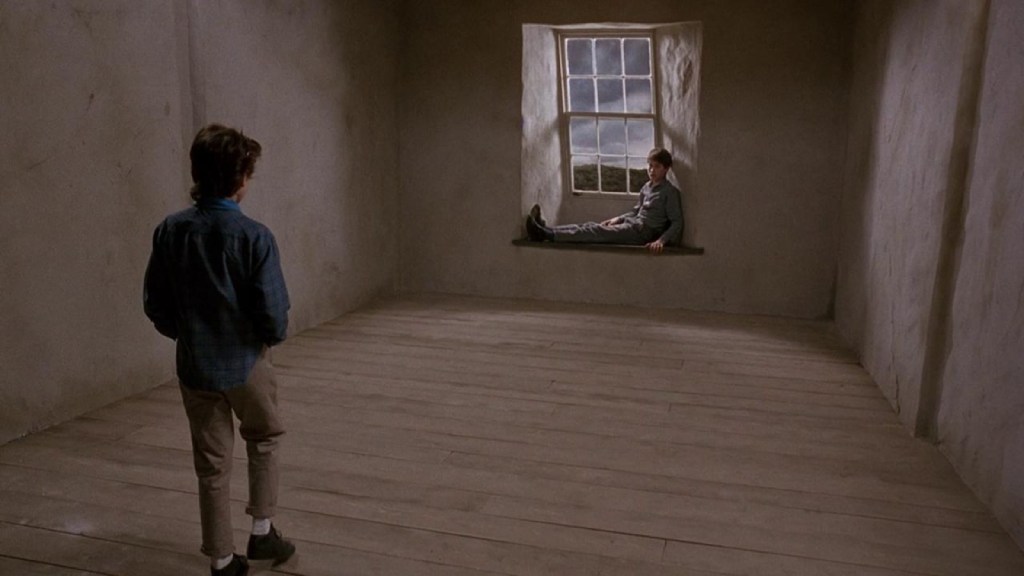
The children’s novel Marianne Dreams had been adapted into a six-part series for British television in the 70s. Director Bernard Rose realized the horror potential of the material. While the book and series are about a child using fantasy to escape reality, Paperhouse is about a child coming to terms with death. As such, it’s far darker and more troubling than its source material. Though Rose has never acheived enormous financial success, his films are often visually compelling (Candyman [1992], Immortal Beloved [1994]), none more so than this one, as the girl’s drawings are reimagined as stark, terrifying landscapes. You can watch it here.
The Hidden (1987)
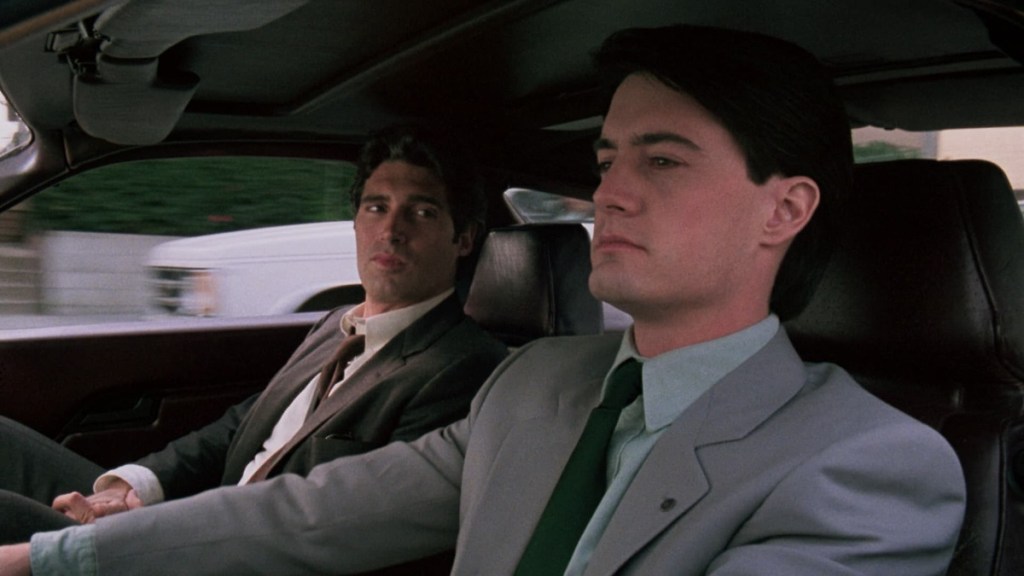
Genre done right! It’s not enough to have a violent alien take over people’s bodies in LA. The alien has to take over a presidential candidate, and then the heroes have to attack said candidate at a press conference…with a fucking flamethrower! The chases are fun, the special effects are suitably gnarly, and Kyle MacLachlan and Michael Nouri have great chemistry. You can watch it here.
Strip Nude for your Killer (1975)

This Andrea Bianchi giallo is sleazy to the core. For some of you, it may even cross a line of sleaziness that prevents you from enjoying the whodunnit elements, most of which are quite good. I can only suggest to you that the sexual perversity is tantamount to the subject of the plot. It borrows the botched abortion/revenge premise of the earlier giallo What Have you Done to Solange? (1972) — a better film if I’m being honest. The sexually charged nature of the fashion business is essential to the nature of the killer and his/her revenge. Strip Nude for your Killer is almost a blueprint for gialli. The scenes with an unidentified figure wearing black gloves are all excellent. And no film where a killer gets a photo of all the intended victims (and caresses it with black gloves) can be altogether bad. It’s moodily shot and full of suspense…and Edwige Fenech. You can watch it here. You might need a shower after it’s over.
The Innocents (1961)

Jack Clayton’s The Innocents is a highbrow ghost story based on “The Turn of the Screw”. Clayton was a director more famous for the films he didn’t make (The Tenant, Casualties of War, Fall Creek) rather than the ones he did (Something Wicked This Way Comes [1983] The Great Gatsby [1974]). While circumstance played a role in that unfortunate career trajectory, his unwillingness to compromise no doubt was the major factor. This is his best film. He insisted it work both as a straight ghost story and the tragic result of the governess’s sexual repression. Powerful, handsomely mounted (by Freddie Francis), and bolstered by pitch-perfect performances (including the children), The Innocents has influenced most ghost films post 1961. You can watch it here.
Dead and Buried (1981)

I don’t why people are down on this film. It got bad reviews and did little business when it came out. More significantly, it hasn’t been reevaluated or even afforded the status of other horror films of the slasher boom; a good deal of them have gotten the remake treatment —My Bloody Valentine, Prom Night, Terror Train, etc. Maybe it’s because Dead and Buried doesn’t quite qualify as a slasher. There’s too much old-fashioned storytelling going on, and Albert Robertson gives it a touch of class.
The mystery elements are the part I like best. The opening is a real shocker, but it makes perfect sense when you finally understand the dark happenings in the coastal town of Potters Bluff. This was directed by Chicago-born Gary Sherman whose Raw Meat (1971), a.k.a. Death Line, was one of the best horror films of the 70s. Dead and Buried doesn’t quite have the subtextual power of that film, but it’s good fun. You can watch it here.
The Funhouse (1981)

It’s a simple premise; a group of teenagers spend the night in a sleazy travelling carnival. They witness the murder of a prostitute and soon they become the hunted. The family of carny killers (much like the Sawyers in director Tobe Hooper’s The Texas Chainsaw Massacre [1974]) are almost more sympathetic than the victims. The freaks love each other and create a special position for the physically deformed and mentally handicapped member–Leatherface and Gunther, respectively. And they didn’t start this shit. In both films, their space is invaded by a bunch of self-righteous normies who laugh at their traditions and break into their homes uninvited.
This is my father’s favorite slasher film and when I was growing up, he took great delight watching it with me whenever it played on television. Naturally, I love it. Here’s the trailer.
The Seventh Victim (1943)

Mark Robson’s The Seventh Victim is one of the oddest horror films I’ve seen. This begins as a typical murder mystery. A young woman’s sister goes missing and she hires someone to find her. As the story progresses, the plot becomes tighter, intricately woven around a cult of devil worshippers. The enemy, it turns out, is truly within as our heroine slowly begins to accept the same fate as her sister. It’s a 71-minute moody tone poem permeated with doom. You can watch it here.
Motel Hell (1980)
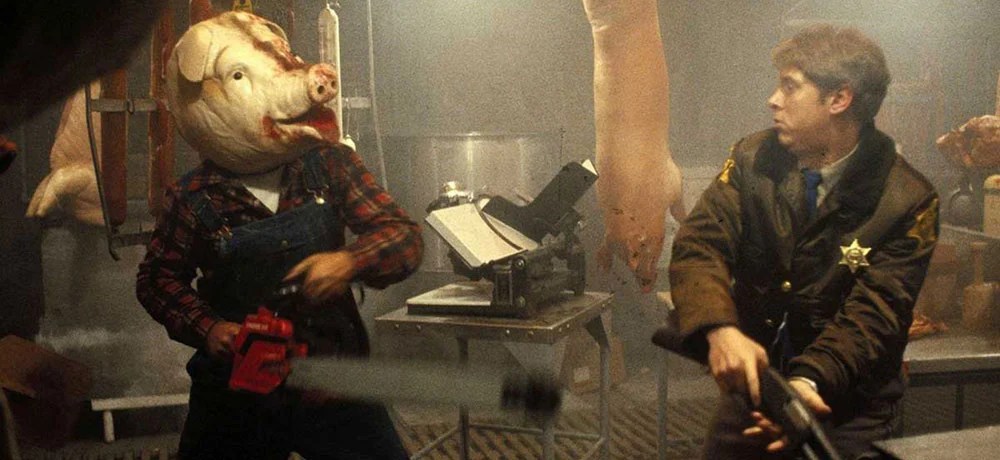
I’m well aware that Kevin Connor’s film is considered campy by many. The casting of Rory Calhoun seals that deal. I’m not so sure I agree, Much like The Texas Chainsaw Massacre (1974), I’d label it black humor. TCM’s subtext about the ethics of carnivorism and the meat industry have been replaced here with a satire of Southern values as Calhoun courts Nina Axelrod in arch romantic scenes while his livlihood involves turning humans into produce. It’s funny and gruesome. I will say it was a childhood favorite, so nostalgia might be clouding my judgment. But it ends with a chainsaw duel in a slaughterhouse with Calhoun wearing a bloody pigs’s head. Come on! You can watch it here.
The Fury (1978)

It’s all over the place. That’s the charm. Is it an action film? The military-style raid on the beach would suggest so. Is it a hippy comedy? Kirk Douglas in disguise reminds me of Mel Brooks. Or maybe he reminds me of Tom Atkins getting it on with a 20-year-old. Is it a family drama? There are enough hysterics to suggest so. It is ultimately a horror film. Why? Because it throws Carrie into the mix. I’m not kidding, By the time John Cassavetes explodes and his fucking head shoots toward the camera and bounces off the ground, I think you’ll be having too much fun to care what genre to call this Frankenstein’s Quilt. It’s got a ton of problems, but watching DePalma work his magic makes most of them feel small. Is it his best film? No. Is it his 12th best film? Again, no. But it’s a lot of fun and there more than a few unnerving moments. You can watch it here.
All the Colors of the Dark (1972)
Sergio Martino’s giallo uses the same elements as The Seventh Victim (1943), particularly the devil cult angle, but does something decidedly more commercial with it. This is a proper murder mystery complete with misdirection. Edwige Fenech (again!) gets caught up in a Black Mass. Soon she is haunted by nightmares of a man stalking her. The same man starts doing it in real life. The nightmare sequences make this unique, but they fit in perfectly with this genre. You can watch it here.
Anatomy (2000)
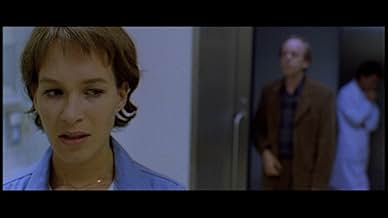
Stefan Ruzowitzky’s film was a huge hit in Germany. It’s not hard to see why. It stradles the disgusting with the chic, wrapping it up in a tense widescreen thriller about a subset of anatomy students called the Anti-Hippocratic society. They prefer to experiment on the living. You can watch it here.
It Follows (2014)
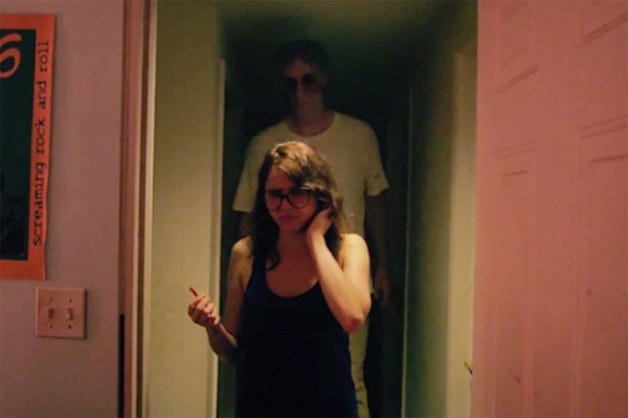
David Robert Mitchell’s It Follows (2015) is a modern horror film about a sexually transmitted curse–a figure follows those who have been possessed by the curse. The figure looks human, but its singularly murderous focus gives it away. They appear at any time and at any place. The only way to stop the following/murdering is to have sex with someone else. They take on the curse until they’re killed. The curse then returns to you.
This might seem silly, but there are two results of this premise. The first is that the viewer must constantly scan the image for someone who might be following the characters. This is the most visually tense horror movie since Halloween (1978). The second result is subtextual gold. The “following” from a past mistake (in this case sexual–a very common human regret) is afflicting these characters much like everyone’s past. Every broken heart, every closeted skeleton, every bad decision is ready to strike your ego at any time. You can’t shake them because they’re part of what makes you. The final shot of the two characters gingerly going for a walk is perfection. All those out of focus people (potential disasters–if you say hello to the wrong person, they could up end up killing you or worse, boring you to death) and the fact these two final characters are bound by their shared past mistakes make for the most indelible portrait of growing old while courting isolation I’ve seen on film. Utterly beautiful and terrifying. You can watch it here.
The Old Dark House (1932)

I’ve talked about this film before (with the source novel). I talk about it again because it’s not generally mentioned as an example of 30s Universal horror. A pity, because it is Universal’s best horror film. I’m envious of James Whale’s balance of terror and comedy. You can watch it here.
The Eyes of Laura Mars (1978)

John Carpenter claimed his script was “shat upon”. I dunno. I think it got first class treatment and it’s commercial success only bolstered Carpenter’s image at the time. Faye Dunaway stars as a New York photographer who develops the psychic ability to see the perspective of a serial killer. She sees what he does, even when he starts coming after her. Director Irvin Kershner isn’t exactly playing the horror up to the levels of batshit insanity the premise is screaming for, but he latches on the giallo style with aplumb. Still, it’s a shame DePalma didn’t direct it. You can watch it here.
Dementia 13 (1963)

When I was young, Francis Ford Coppola’s first Hollywood venture (he’d made two independent nudie films before this) was a bargain-bin VHS find. It was a cheapo horror movie (made for the great Roger Corman) only of interest for those who were interested in Coppola’s humble beginnings. I was recently surprised to see that Coppola remastered the film and rereleased it. Why bother affording such lavish attention on such a little film. Though I suppose we can all be thankful that it wasn’t fucking Jack (1996).
After a recent rewatch I can honestly say it’s pretty damn good, much better than I remember. A lot of this is being able to see the damn thing clearly. Most VHS tapes were notoriously bad at preserving the image. The Dementia 13 I saw as a child is not the one you can see now. The shock effects are worthy of the best 60s horror whodunnits. The added decapitation (Corman insisted) still sticks out a little, but Coppola got rid of the stupid prologue shot by Monte Hellman. The music is fabulous and the performances aren’t bad at all. You can watch it here.
Knife + Heart (2018)

Yann Gonzalez’s Knife + Heart (2017) is a neo-giallo set in 1979 against the backdrop of the French porn industry. The depiction of that setting is one of the film’s greatest strengths. I do wish it had more scenes of cat-and-mouse. It’s such a pretty film, but the murder scenes are almost painterly rather than suspenseful.
It begins with an homage to Friedkin’s Cruising (1980), itself heavily influenced by gialli. But where Friedkin played psychological games with the audience (using different voices for the killer, elaborately setting up the suspense), Gonzalez is content to make a testament to films of the past. Say what you want about Strip Nude for your Killer (1975) and Your Vice is a Locked Room and Only I Have the Key (1972), but they were creative product designed to entertain the audience. Too many times Knife + Heart seems to exist only to reflect past glories.
The setting does really make it worthwhile though. The film cleverly juxtaposes the filming of the porn with real life until it becomes difficult to differentiate the two. This same trick All the Colors of the Dark (1972) uses with its dream sequences. When the leather-gloved killer finally shows up on set, it feels natural. And it is fun to see the cliches — the creepy police who are incredibly unhelpful, the moment someone sees a clue in the film/picture, and the sins of the past returning years later. You can watch it here.
Frozen (2010)

In the middle of an unremarkable career as a director, Adam Green made this, a surprisingly tense and realistic horror film. Well, realistic once the premise is set. Three skiers are trapped at the top of a chair lift. You have to believe that would happen and the resort would close down for a long time. Once you buy that, the film is entertaining in a white-knuckle sort of way. Every time you think of something they could do to escape, they try it. Then, you get the pleasure of seeing how stupid you are as all your ideas fail miserable. And they’re freezing to death. And there are wolves. Hungry wolves. You can watch it here.
Antichrist (2009)

Lars Von Trier is a true provacateur. This story of sexual mauling and poisoned attempts to heal is meant to provoke. Stop your bitching and enjoy the ride. Charlotte Gainsbourg and Willem Dafoe are their usual daring selves. They play a couple whose child falls out a window while they’re selfishly fornicating in the shower. What follows is a Garden of Eden Redux. Except Eve has agency. And she’s the devil. And he’s a therapist. So, he’s the devil too. You can watch it here.


It Follows was a fresh scenario that I still think about to this day. I think it kickstarted some of the more recent Smile / Talk to Me movies, but stands well above.
I completely forgot about Motel Hell (watched that a long time ago) and Frozen. The latter is really good, and an example of people trying to do the right thing in a bad situation.
A Violent Nature had me unexpectedly captivated. I don’t get scared by horror movies, but there was a strange sense of dread throughout. A movie that actually earns the slow burn title.
LikeLiked by 1 person
I still haven’t caught Mitchell’s follow up to It Follows (Under the Silver Lake — I think), but I’ve heard it’s bonkers.
The question with In A Violent Nature is going to be the rewatch. Will it hold up and will it be half as effective on a smaller screen?
LikeLike