Johnny Guitar (1954)

Truffaut said of Johnny Guitar that the cowboys die like ballerinas. There’s also a lot of animalistic action in the cinema of Ray–check out that v-flock behind Mercedes McCambridge. Sterling Hayden plays the title character, but Joan Crawford is the star. She never had this much sympathy in a performance again. To tell the truth, she never had much before. The colors are bold pastel, the emotions raw and fully on display.
Vertigo (1958)
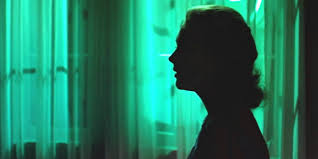
Its themes are gigantic — the obscure desire, necrophilia, the maddening implications of telling someone you’ll love them forever. It’s about obsession, the death drive, and the death spiral. According to David Thompson, Hitchcock privately blamed the film’s financial dissapointment on Stewart’s age and Novak’s inexperience. As Thompson rightly points out, both are crucial attributes to the film. This and Marnie (1964) make for a formidible duo.
Pather Panchali (1955)

Satyajit Ray’s first story of Apu plays as elemental as something like Sunrise (1927), but (like Bresson) the simplistic imagery compiles into something monumentally complex. By the time the storm arrives, it’s already supplied with a ton of metaphorical power. Masterfully told. Supremely affecting.
Pickpocket (1959)

Speaking of Bresson, this electrifying bit of concentrated austerity sees theft as a devotional calling much like being a monk. Each attempted pocket picked represents a nail-biting gamble of the soul.
Throne of Blood (1958)

I’m hesitant to call it the best screen adaptation of Macbeth because there are so many great ones. Let’s say there is none better. It’s a minimalist film, the sets are mostly fog, wind, trees, mist, and black walls, famously incorporating elements of Noh in the performances — particularly Lady Macbeth who appears to be a demon.
Shadows (1959)
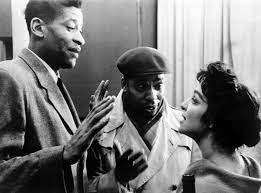
Shadows is often referred to as the birth of American independent cinema or some other such accolade, but this (like most pioneering/inaugural praise) is overblown and almost certainly inaccurate. Ostensibly a film about race relations during the beat generation, its subjects are the same in all of his work–love and expression. After self-producing this masterpiece, Cassavetes went on to two very unhappy experiences within the studio system. In 1961, he butted head with Paramount over the editing of Too Late Blues (1961). They fobbed him off to United Artists and producer ordinaire Stanley Kramer for the ill-fated A Child is Waiting (1963), a film about children with intellectual disabilities. Kramer (who never met an important subject he didn’t want to infanfantilize) didn’t like his director’s honest, unsentimental approach. The film suffered.
Fed up and pissed off, Cassavetes saved his money from The Dirty Dozen and Rosemary’s Baby and made Faces (1968), a supreme “fuck you” to the wretched world of bean counters and walking corpses. After that, there was no turning back.
Kiss me Deadly (1955)

Is bat-shit-lunacy-noir a genre. Again, I’ll cite Truffaut, who explained it better than I ever could. “To appreciate Kiss Me Deadly, you have to love movies passionately and to have a vivid memory of those evenings when you saw Scarface, Under Capricorn, Blood of a Poet, Les Dames du Bois de Boulogne, and The Lady From Shanghai. We have loved films that had only one idea, or twenty, or even fifty. In Alrdich’s films, it is not unusual to encounter a new idea with each shot. In this movie the inventiveness is such that we don’t know what to look at–the images are almost too full, too fertile. Watching a film like this is such an intense experience that we want it to go last for hours. It is easy to picture its author as a man overflowing with vitality, as much at ease behind a camera as Henry Miller facing a blank page. This is the film of a young director who is not yet worried about restraint.”
Forty Guns (1957)
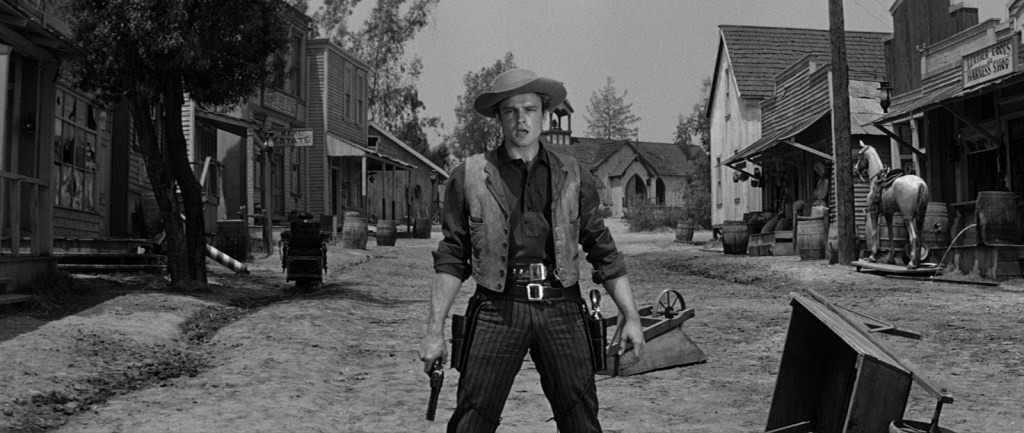
The plot of Sam Fuller’s delirious western, Forty Guns (1957) is hardly the point. Barbara Stanwyck commands a posse of 40 hired guns to rule over the frightened town of Tombstone…power corrupts…blah blah blah,,,haven’t you seen a western before? This film isn’t special because of its story. It’s 80 minutes of pure lightning. Fuller shot it in 10 days on a miniscule budget. He packed it with as much sex and violence as the law would allow. There’s a 3-minute tracking shot and a damned tornado. Awesome!
Angel Face (1952)

Otto Preminger’s fatalistic noir “Angel Face” (1953) is a film so bleak and disturbing that I hesitate to call it entertainment. Robert Mitchum and Jean Simmons star as a couple made in hell. You’ve seen murderous couples like this in “The Postman Always Rings Twice” (1946) and “Double Indemnity” (1944), but the lovers in those (admittedly great) films are amateurs compared to these two. By the end, even the concept of justice has washed its hands of their destructive sexuality. The only thing that can take them out is their own egos. The ending has to be seen to be disbelieved.
The Naked Spur (1953)
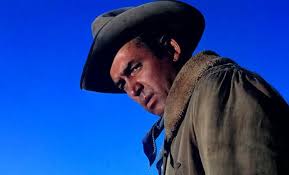
The greatest Western ever made. This shot from the end is achingly beautiful. Jimmy Stewart tries to be low down, but his humanity (in the form of Janet Leigh) keeps calling his name. Angular and anguished, it’s a beautiful dream haunted by the psychology of evil that Mann portrayed so well.
My favorite films of the 1930s
My favorite films of the 1960s
My favorite films of the 1970s
My favorite films of the 1980s
My favorite films of the 1990s

 James Scott Byrnside
I’m currently taking a class on 50’s directors basically as an excuse to rewatch Forty Guns and Johnny Guitar. I have a Spotify playlist that I listen to when I take a shower, and whenever Peggy Lee comes on singing “Johnny Guitar,” I perform a dream ballet. I refer to anything that puzzles me in a disturbing way as “The Great Whatzit.” I can’t get Clorus Leachman’s extended panting sequence over those crazy backward credits out of my head. I’m not sure if there’s a more disturbingly glorious kiss than the final one in Vertigo: that glorious music, the turntable whirling – and Stewart could be Novak’s grandfather. (I prefer Rear Window, but the problem is the same.)
Your list got into my head.
LikeLiked by 1 person
Vertigo is filled with sequences/shots that are disturbingly gorgeous. I always return to Novak’s entrance in that restaurant. It would be such a simple few lines on the screenplay. Hitchcock turns it into high drama. The camera starts on Stewart and then immediately separates from him to an entirely new position. When the camera returns to him it has passed the 180 degree line which (combined with the red walls of the room and the mirror) naturally disorients us. The lack of a clear entrance and exit and the dramatic changes in lighting suggest we can’t trust Stewart’s perception. She literally disappears into a wall. https://www.youtube.com/watch?v=Beac86mN8XM
LikeLiked by 1 person