Sherlock Jr (1924)
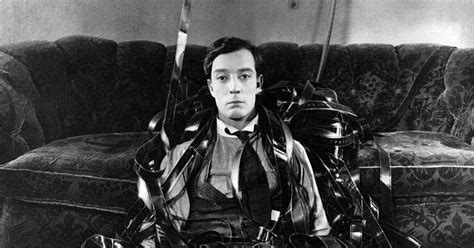
Sherlock Jr. (1924) is a dazzling showcase of Buster Keaton’s inventive brilliance, blending slapstick, surrealism, and cinematic sleight-of-hand into a compact, breathless marvel. As a projectionist who dreams himself into a detective film, Keaton uses groundbreaking visual tricks—seamless edits, dream logic transitions, and meta-movie magic—to explore the boundary between film and reality. What makes it genius isn’t just the technical wizardry (which still feels fresh a century later), but how joyfully it serves the comedy. Every gag, chase, and illusion is precise, elegant, and hilarious. It’s a love letter to cinema that manages to both parody and perfect it.
You can watch it HERE.
The Gold Rush (1925)
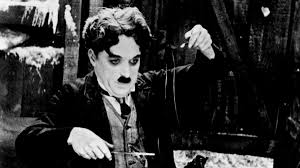
The Gold Rush is Chaplin’s finest achievement because it walks the razor’s edge between desperation and delight, transforming absolute misery into moments of pure comedic gold. In a frozen cabin with nothing to eat, the Little Tramp boils and eats his own shoe—and somehow it’s hilarious. Starvation, loneliness, humiliation—these are the ingredients, but Chaplin stirs them into a story that never loses its heart. The comedy doesn’t mock the suffering—it redeems it.
You can watch it HERE.
Sunrise (1927)
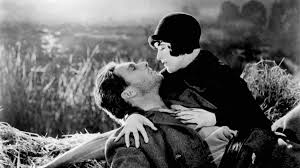
Hallmarks of German Expressionism transposed into a deeply emotional romance. Every shadow, every slant of light, is charged with meaning. The fog-draped marshes, the looming silhouettes, the bustling city streets—all become mirrors of the characters’ inner lives. Light shifts not just with time but with emotion: menace melts into tenderness, guilt gives way to grace. In Sunrise, Murnau doesn’t just tell a love story—he builds a world where mood is architecture and emotion is light.
You can watch it HERE.
The Docks of New York (1928)

In just over an hour, Von Sternberg captures more life than many epics: the despair of the working class, the flicker of love in a hopeless place, and the redemptive pull of tenderness against all odds. The dockside saloon feels carved from shadow and steam, and the love story—fragile, drunken, half-damned—burns all the brighter for being so improbable. This is cinema at its most elemental: physical, intimate, mythic.
You can and should watch it HERE.
Metropolis (1927)

A towering work that shaped the future of science fiction before the genre had fully found its voice. Fritz Lang conjured a city of impossible scale and design, blending Gothic grandeur with machine-age dread in images that still echo through the medium—robotic revolutions, towering skylines, the split between mind and labor. Its themes of industrial dehumanization and class division remain startlingly relevant, but it’s Lang’s architectural imagination and bold visual storytelling that have left the deepest mark.
You can watch it HERE.
The General (1926)
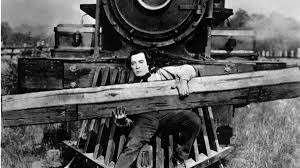
When I think of great cinematic chases (Bullitt [1968], The Driver [1979], The Road Warrior [1981]), the constant element is screen direction. There’s never a moment in any of those films when the viewer doesn’t know the spatial relationship between the vehicles. That may sound rather bland, but if you’ve ever watched a modern action film (I’m especially thinking about that stupid Bourne shit), you should know what I’m talking about. In modern chases, the story of the chase is meaningless. It’s the feeling that’s important. Unfortunately, that feeling is usually boredom or annoyance. It’s impossible to tell who is chasing whom or where they are in relationship to one another. They might as well be in different countries.
Buster Keaton’s The General isn’t just a chase—it’s a single, sustained chase that spans an entire film, executed with real trains, real danger, and clockwork timing. What makes it possibly the greatest is not only its scale and innovation, but how it merges action with character, comedy, and narrative clarity without a single line of spoken dialogue. The train becomes an extension of Keaton’s body—both vehicle and battleground—making it not only thrilling but deeply expressive.
You can watch it HERE.
Nosferatu (1924)

F.W. Murnau conjures dread not through rapid editing or trickery, but through the sheer power of the image. Every frame feels etched in shadow, carefully composed to draw the eye to looming shapes, empty spaces, or the unnatural stillness of the vampire’s form. Murnau doesn’t rely on montage to build emotion—he lets the image speak for itself. Count Orlok’s silhouette creeping up the staircase is as iconic as cinema gets, a moment where horror is born from pure composition. It’s a film that understands the haunted power of light and shadow, and how to make the screen itself feel cursed.
You can watch it HERE.
Un Chien Andalou (1929)

Luis Buñuel and Salvador Dalí’s surrealist short doesn’t just ignore narrative convention, it obliterates it. Its brilliance lies in its refusal to make sense, instead unleashing a string of shocking, dreamlike images that lodge in the subconscious like splinters. The infamous eyeball slice isn’t just grotesque—it’s a declaration of war on passive viewing. The film operates on dream logic, where time, identity, and space collapse into free-associative nightmare. It’s disturbing, funny, and exhilarating, and nearly a century later, it still feels more dangerous and alive than most films made today.
You can watch it HERE.
Greed (1924)

Adapted from Frank Norris’s novel McTeague, the film strips the American Dream down to its most grotesque impulses—obsession, avarice, and moral decay. Von Stroheim shot the film on location in grimy tenements and the blazing Death Valley desert, rejecting studio gloss for physical and emotional authenticity. Its power lies in the way it charts the slow corrosion of ordinary people, turning love into hatred, and desperation into murder. Though it was famously butchered by the studio from nine hours to just over two, the surviving version still carries the weight and vision of a cinematic epic. The missing footage only exists now as still photos. It was melted down for its silver content. Talk about greed!
You can watch it HERE.
Pandora’s Box (1929)
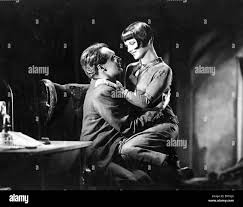
The electrifying collaboration between director G.W. Pabst and star Louise Brooks. Pabst’s cool, precise framing and naturalistic style provide the perfect counterpoint to Brooks’ magnetic, unsettling screen presence. Her sharply cut black bob (Irene had her cut) , angular cheekbones, and unreadable expressions don’t just draw the eye—they dominate the frame. As Lulu, Brooks is both victim and force of destruction, radiating a dangerous innocence that confounds everyone around her. Pabst doesn’t moralize; instead, he lets the tragedy unfold with emotional clarity and a stark visual elegance. Together, they create a story that’s both sexually charged and fatally inevitable, where beauty and doom go hand in hand. Few films have captured erotic power and societal repression with such style and depth. Awesome.
You can watch it HERE.
My favorite films of the 1930s
My favorite films of the 1950s
My favorite films of the 1960s
My favorite films of the 1970s
My favorite films of the 1980s
My favorite films of the 1990s

 James Scott Byrnside
Out of curiosity, this was totally written with ChatGPT, right?
LikeLike